



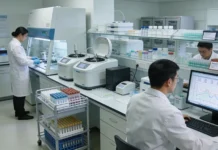






The pharmaceutical industry is currently undergoing a seismic shift, often referred to as Pharma 4.0, where the convergence of physical and digital worlds is redefining how research and development (R&D) and quality control (QC) are conducted. At the heart of this transformation is the concept of the “Smart Laboratory,” a facility where instruments, data, and personnel are linked through connected pharma equipment ecosystems. This evolution is not merely about upgrading hardware; it is about creating a cohesive digital fabric that enhances visibility, improves data integrity, and accelerates the delivery of life-saving medicines. The maturity of these systems has now reached a point where “digital natives” in the lab—instruments born with connectivity—are becoming the standard, forcing legacy facilities to adapt or risk obsolescence.
The Foundation of Connectivity: From Silos to Ecosystems
Traditionally, pharmaceutical laboratories have operated as collections of isolated islands. Analytical balances, chromatographs, and bioreactors functioned independently, often requiring manual data transcription—a process prone to human error and inefficiency. The rise of connected pharma equipment ecosystems challenges this status quo by leveraging the Internet of Things (IoT) to create a seamless flow of information.
The Role of IoT and Middleware
In a modern smart lab, middleware solutions act as the central nervous system, translating the diverse languages of different instrument vendors into a unified format. This interoperability ensures that a spectrophotometer from one manufacturer can communicate effectively with a Laboratory Information Management System (LIMS) or Electronic Lab Notebook (ELN) designed by another. The immediate benefit is a drastic reduction in manual data entry, which directly correlates to higher data integrity and compliance with stringent regulatory standards like 21 CFR Part 11.
However, the technical implementation of this connectivity is nuanced. It involves the adoption of communication standards such as SiLA (Standardization in Lab Automation) and OPC UA (Open Platform Communications Unified Architecture). These protocols allow for “plug-and-play” integration, reducing the IT burden of onboarding new equipment. For instance, when a new mass spectrometer is plugged into the network, it should automatically register its serial number, calibration status, and capabilities with the central management software. This level of automation—often called “self-documenting” infrastructure—frees scientists from the administrative burden of asset management, allowing them to focus on science.
Cloud-Based Centralization
The shift toward cloud computing has further enabled these ecosystems. By centralizing data storage, organizations can break down the walls between departments. A scientist in a Boston R&D facility can instantly access and analyze stability data generated by a connected chamber in a Singapore manufacturing plant. This level of accessibility fosters a collaborative environment where insights are shared globally in real-time, accelerating the decision-making process.
Moreover, cloud centralization facilitates the “datalake” concept. Instead of data residing in proprietary file formats on local hard drives (where it is effectively “dark data”), it is streamed into a structured repository. Here, it becomes accessible for retrospective analysis. For example, if a specific batch of API shows unusual degradation years after development, scientists can query the datalake to find every dissolution test ever run on that compound across all global sites, correlating environmental conditions with results in seconds—a task that would take weeks in a paper-based or siloed digital environment.
Digital Twins: Simulating the Future of Lab Operations
One of the most advanced applications within connected pharma equipment ecosystems is the implementation of digital twin technology. A digital twin is a virtual replica of a physical asset, process, or system that updates in real-time to reflect its real-world counterpart.
Enhancing Process Development
In pharmaceutical process development, digital twins allow scientists to simulate experiments before running them physically. For instance, by modeling the hydrodynamics of a dissolution bath, researchers can predict how changes in paddle speed or temperature might affect drug release profiles. This predictive capability reduces the consumption of expensive API (Active Pharmaceutical Ingredient) and minimizes the number of physical trial-and-error iterations required.
Recent implementations have taken this a step further by integrating “hybrid models,” which combine mechanistic understanding (physics and chemistry equations) with data-driven models (ML algorithms trained on historical data). This hybrid approach allows for highly accurate simulations even in complex biological processes, such as cell culture growth in a bioreactor. A digital twin of a bioreactor can predict when the cell density will peak or when nutrient levels will drop, allowing for automated feed adjustments that maximize yield without human intervention.
Operational Efficiency
Beyond experimentation, digital twins are revolutionizing asset management. By mirroring the operational state of critical equipment, such as ultra-low temperature freezers or incubators, lab managers can visualize performance trends and identify anomalies. If a digital twin detects a deviation in cooling efficiency, it can trigger an alert for preventive maintenance, thereby averting catastrophic sample loss.
AI-Driven Analytics: Turning Data into Intelligence
The sheer volume of data generated by connected pharma equipment ecosystems is overwhelming for human analysis alone. This is where Artificial Intelligence (AI) and Machine Learning (ML) become indispensable.
Predictive Analytics in R&D
AI algorithms can comb through historical data to identify correlations that drive success in drug formulation. By analyzing parameters from thousands of previous experiments, machine learning models can suggest optimal reaction conditions or predict the stability of a new compound. This transition from descriptive analytics (what happened) to predictive analytics (what will happen) allows scientists to focus their efforts on the most promising avenues of research.
For example, in synthetic chemistry, AI tools integrated into the lab ecosystem can analyze successful reaction pathways from the last decade of the company’s research. It can then suggest a synthesis route for a new molecule that avoids expensive reagents or hazardous byproducts, effectively “learning” from the organization’s collective institutional memory. This is particularly valuable in preventing the “reinvention of the wheel,” where different teams unknowingly repeat failed experiments.
Automated Anomaly Detection
In a high-throughput screening environment, identifying false positives or instrument drift is a time-consuming task. AI-driven tools integrated into the equipment ecosystem can automatically flag outliers in real-time. For example, if a liquid handler dispenses an incorrect volume due to a clogged tip, the system can instantly pause the run and notify the operator, preventing the generation of bad data and wasted reagents.
Cybersecurity: The Invisible Shield
As labs become more connected, the attack surface for cyber threats increases. Intellectual property (IP) theft and ransomware attacks are existential threats in the pharmaceutical industry. Therefore, a robust connected pharma equipment ecosystem must be built on a “Zero Trust” architecture.
Network Segmentation and Identity Management
This involves strict network segmentation, where lab instruments operate on a separate virtual network (VLAN) from the corporate email and internet traffic. Even if a phishing email compromises a laptop, the malware cannot jump to the robotic liquid handler or the chromatography data system. Furthermore, identity management systems ensure that every user interaction—whether physically at the instrument or remotely via the cloud—is authenticated and logged. Biometric logins (fingerprint or retinal scans) are becoming common on high-value equipment to ensure that the person running the experiment is verified and trained.
Overcoming Barriers to Implementation
While the benefits are clear, the path to fully realized connected pharma equipment ecosystems is not without challenges. Legacy equipment, cybersecurity concerns, and the need for workforce upskilling are significant hurdles.
Integrating Legacy Systems
Many labs rely on robust instruments that are decades old but lack modern connectivity ports. “Retrofitting” strategies, using IoT gateways and external sensors, are essential to bring these assets into the digital fold without incurring the capital expense of total replacement. These gateways can “read” the electrical signals or even use optical character recognition (OCR) cameras to read the screens of older devices, digitizing the output of a 20-year-old balance without replacing it.
The Human Element: Change Management
Finally, the success of a smart lab depends on the people. Scientists must transition from being “operators of instruments” to “architects of data.” This requires significant upskilling in data literacy and a cultural shift away from manual ownership of tasks. Change management programs that identify “digital champions” within the lab—scientists who are enthusiastic about the technology—are crucial for driving adoption and helping peers navigate the transition.
Conclusion
The transition to smart laboratories is no longer a futuristic concept but a present-day imperative for pharmaceutical companies aiming to remain competitive. By investing in connected pharma equipment ecosystems, organizations can unlock unprecedented levels of efficiency, quality, and innovation. The synergy of IoT connectivity, digital twins, and AI-driven analytics creates a feedback loop of continuous improvement. As these technologies mature, the lab of the future will become an autonomous entity where the equipment itself facilitates the discovery process, ultimately ensuring that safer, more effective therapies reach patients faster than ever before.