









The image of the scientist hunched over a bench, manually pipetting fluid from one tube to another, is becoming a relic of the past. As the pharmaceutical industry faces pressure to develop complex biologics and personalized medicines faster and cheaper, manual workflows have become a bottleneck. The solution lies in the widespread adoption of pharma R&D laboratory robotics—a technological wave that is transforming the laboratory from a craft workshop into a high-precision data factory. This shift is not merely about speed; it is about the fundamental quality and reproducibility of science itself.
The Accuracy Advantage: Eliminating the Human Variable
In any scientific experiment, the human operator is often the largest source of error. Fatigue, distraction, and physical limitations lead to variability. A technician pipetting 384 wells in a microplate will inevitably have slight variations in volume or technique between the first well and the last.
Precision at the Microliter Scale
Automated liquid handling systems address this head-on. Advanced air-displacement or acoustic dispensing technologies can deliver volumes as low as nanoliters with extreme precision. More importantly, they do it identically for the first sample and the ten-thousandth. This reduction in variability is critical for complex assays like cell-based screenings or ELISA (Enzyme-Linked Immunosorbent Assay), where a 5% error in volume can lead to a false negative, potentially causing a promising drug candidate to be discarded.
Furthermore, robots don’t get tired. They don’t skip steps, and they don’t misread labels. This “robotic reliability” is crucial for the emerging field of AI-driven drug discovery. Artificial Intelligence models are “hungry” for data, but they are also sensitive to noise. If the training data is polluted with human error, the AI model will be flawed (Garbage In, Garbage Out). By using pharma R&D laboratory robotics, companies generate the “clean,” structured, and high-quality datasets required to train the next generation of predictive algorithms.
High-Throughput Screening (HTS): Speeding Up Discovery
The search for a new drug often involves looking for a “needle in a haystack” among millions of chemical compounds. Pharma R&D laboratory robotics make it possible to search the haystack at lightning speed.
Integrated Workcells and “Lights-Out” Processing
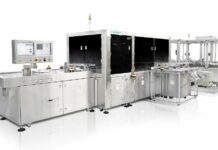
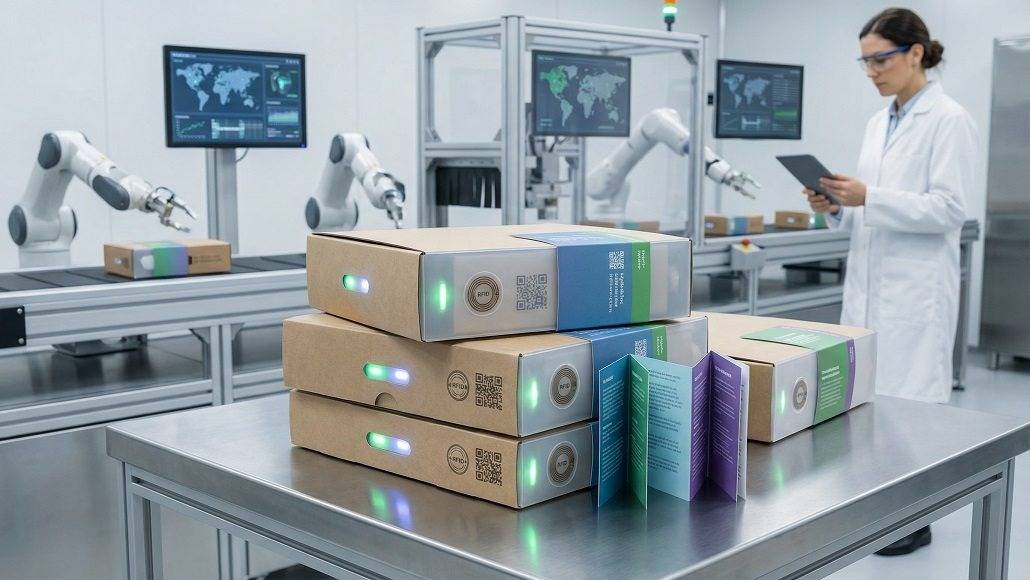
Modern automation goes beyond standalone instruments. We are seeing the rise of integrated workcells—enclosed systems where robotic arms (often SCARA or 6-axis articulated robots) move plates between storage hotels, dispensers, incubators, and detectors. These systems can run unattended overnight and over weekends, a concept known as “lights-out processing.”
- Case Study Utility: Imagine a screening campaign that requires 50,000 assays. A human team might take weeks to complete this, working in shifts. A robotic workcell can complete it in days, ensuring that every plate is treated with the exact same incubation time. This temporal consistency eliminates “batch effects” where Monday’s results look different from Friday’s simply because the reagents sat out longer.
Closed-Loop Discovery
The cutting edge of HTS is “closed-loop” automation. Here, the robot doesn’t just run a pre-defined list of experiments. It feeds the results of the first batch into an AI algorithm, which analyzes the data and decides what experiments to run next. The AI then instructs the robot to prepare new compound mixtures based on the previous results. This autonomous cycle of hypothesis-experiment-analysis allows the system to “navigate” the chemical space much more efficiently than a human could, focusing resources on the most promising areas.
Sample Preparation: The Unsung Hero
While HTS gets the glory, sample preparation is where automation often provides the most tangible daily return. Preparing samples for chromatography or mass spectrometry involves tedious steps: weighing, dissolving, filtering, and diluting.
Automated Sample Prep
Robotic sample preparation stations can handle hazardous solvents and repetitive motions that would cause Repetitive Strain Injury (RSI) in humans. They track every step via barcode scanning, creating a perfect audit trail. For Quality Control (QC) labs, this means faster turnaround times for release testing; for R&D, it means that the “boring” work is done before the scientist even arrives in the morning.
- Solid Dispensing: One of the hardest tasks to automate is weighing out powders (due to static and clumping). innovations in automated powder dispensing now allow for the precise weighing of milligram quantities of toxic APIs into vials, protecting the scientist from exposure and ensuring accurate concentrations for potency testing.
The Future: Modular and Collaborative Robotics
The future of lab automation is moving away from massive, rigid monuments toward flexibility.
Mobile Mobile Robots (AMRs)
Autonomous Mobile Robots are now being deployed to transport reagents and samples between different functional islands in the lab. A robot might pick up a rack of culture media from the cold room and deliver it to the cell culture suite.
Cobots (Collaborative Robots)
Unlike traditional industrial robots that need to be caged for safety, “cobots” are designed to work safely alongside humans on the benchtop. Sensors allow them to stop instantly if they touch a human. A scientist might hand a plate to a cobot, which then places it in a reader. This collaboration allows for a “human-in-the-loop” workflow that combines the dexterity and decision-making of a person with the precision and endurance of a machine.
Conclusion
Laboratory automation is not about replacing the scientist; it is about augmenting their capabilities. By integrating pharma R&D laboratory robotics, companies are building an infrastructure of reliability. They are ensuring that when a discovery is made, it is real, reproducible, and robust. In an industry where failure is the norm, automation provides the accuracy and throughput necessary to find the few successes that change the world. It frees the human mind to do what it does best: ask the right questions, while the robots handle the answers.