







Defining High-Potency Compounds and Exposure Frameworks
Pharmaceutical substances earn high-potency classification through multiple pathways reflecting their pharmacological activity and toxicological profiles. Active pharmaceutical ingredients exhibiting biological activity at doses below 150 micrograms per kilogram of body weight, binding to specific cellular receptors with high affinity, demonstrating oncogenic potential, or causing developmental toxicity typically fall within HPAPI categorization. However, potency alone does not determine handling requirements; the occupational exposure limit established through toxicological assessment provides the quantitative foundation for containment strategy development.
Occupational exposure banding systems translate complex toxicological data into practical handling guidance. While standardization remains incomplete across the pharmaceutical industry, most organizations employ four to five-tier classification schemes. Occupational exposure band designations typically progress from OEB 1, representing compounds with exposure limits above 1000 micrograms per cubic meter requiring minimal containment beyond general ventilation, through OEB 5, encompassing substances with exposure limits in the nanogram per cubic meter range demanding the most stringent isolation measures. Each band elevation corresponds to increasingly sophisticated engineering controls, enhanced personal protective equipment requirements, and more rigorous environmental monitoring protocols.
The absence of universal exposure banding standards creates operational complexity for contract manufacturers serving multiple clients and pharmaceutical companies operating across regulatory jurisdictions. European regulatory frameworks emphasize permitted daily exposure calculations derived from no-observed-effect-level data, while North American approaches focus more directly on occupational exposure limits established by organizations including the American Conference of Governmental Industrial Hygienists and the Occupational Safety and Health Administration. This regulatory fragmentation necessitates that containment equipment and facility designs accommodate the most conservative interpretations to ensure global compliance.
Primary Containment Technologies for HPAPI Manufacturing
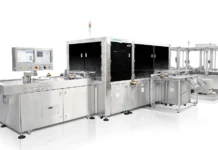
Containment isolators represent the gold standard for high-potency pharmaceutical manufacturing, providing complete physical separation between operators and processed materials. These enclosed systems feature rigid walls constructed from stainless steel or transparent polymers, with materials handling conducted through integrated glove ports that maintain continuous barrier integrity. Advanced isolator designs incorporate multiple protective layers including HEPA or ULPA filtration achieving 99.99 percent particle removal efficiency, negative pressure maintenance ensuring inward airflow even during glove manipulation, and sophisticated environmental monitoring systems tracking pressure differentials, particle counts, and airborne compound concentrations in real time.
Modern pharmaceutical isolators achieve containment performance reaching occupational exposure bands 5 through 7, corresponding to exposure limits in single-digit nanogram per cubic meter ranges. This capability stems from engineering innovations including laminar airflow distribution preventing dead zones where compounds might accumulate, continuous leak detection systems monitoring barrier integrity, and integrated rapid transfer port technology enabling material introduction without compromising containment. Isolators designed for cytotoxic compound handling often incorporate robotics eliminating manual manipulation entirely, voice-activated controls reducing surface contamination from repeated touching, and automated cleaning systems employing hydrogen peroxide vapor or other validated decontamination agents.
Biosafety cabinets provide an alternative containment approach suitable for lower-potency applications and processes requiring frequent operator access. Class II Type B biosafety cabinets, the configuration most commonly deployed in pharmaceutical manufacturing, create inward airflow protecting operators while HEPA-filtered downflow air protects products from environmental contamination. Unlike isolators providing complete physical separation, biosafety cabinets feature open fronts through which operators reach to manipulate materials. This design offers superior ergonomics and accommodates larger equipment but provides reduced containment performance compared to fully enclosed isolators.
The selection between isolators and biosafety cabinets hinges on occupational exposure limit determinations and operational requirements. Compounds classified as OEB 3 or lower, with exposure limits above 10 micrograms per cubic meter, may be safely handled in properly maintained biosafety cabinets supplemented with appropriate personal protective equipment. However, substances reaching OEB 4 or 5 classifications demand isolator-level containment, particularly during high-aerosol-generating operations including milling, blending, and powder dispensing. Hybrid approaches employing biosafety cabinets for solution preparation combined with isolators for dry powder handling enable operational flexibility while maintaining safety standards.
Closed system transfer devices complement primary containment equipment by enabling material movement between processing steps without environmental exposure. These systems employ mechanical connections creating sealed pathways through which powders or liquids flow, with designs ranging from simple split-butterfly valve arrangements to sophisticated docking systems incorporating bag-in-bag-out technology. Implementation of closed transfer devices throughout manufacturing workflows reduces operator exposure during material charging and discharge operations that historically represented contamination risk points even within well-designed containment systems.
Facility Design Principles Supporting HPAPI Operations
Effective HPAPI containment extends beyond equipment selection to encompass comprehensive facility design strategies. The concept of defense in depth, borrowed from nuclear safety engineering, provides the philosophical framework guiding pharmaceutical containment facility architecture. This approach establishes multiple independent protective barriers ensuring that should any single containment measure fail, redundant safeguards prevent exposure or contamination events.
Primary containment, achieved through isolators and closed systems as previously discussed, constitutes the first defensive layer. Secondary containment encompasses facility-level controls including segregated production zones dedicated exclusively to high-potency operations, directional airflow patterns creating pressure cascades from clean corridors toward processing areas, and airlocks with interlocked doors preventing simultaneous opening that could compromise pressure differentials. Manufacturing suites handling HPAPIs typically operate under negative pressure relative to surrounding spaces, with pressure differentials of 10 to 15 Pascals maintained continuously.
High-efficiency particulate air filtration systems form the backbone of secondary containment strategies. HEPA filters installed in supply air systems provide ISO Class 7 or 8 background environments within which primary containment equipment operates, while dedicated exhaust systems fitted with HEPA filtration prevent compound release even if primary containment fails. Advanced facilities incorporate redundant filtration trains with automated switchover capabilities ensuring continuous operation during filter changes, and sophisticated building management systems monitoring differential pressures across filter banks to detect loading or failure conditions requiring maintenance intervention.
Segregation strategies prevent cross-contamination between different pharmaceutical products or between high-potency and conventional manufacturing operations. Dedicated facilities processing only HPAPIs represent the most conservative approach, eliminating cross-contamination risks entirely but requiring substantial capital investment. Multi-product facilities achieve segregation through temporal separation, thoroughly cleaning and validating equipment between campaigns, or spatial separation, maintaining physically isolated processing trains within larger complexes. The European good manufacturing practice guidelines revised in recent years impose increasingly stringent segregation requirements for shared facilities, mandating toxicological justifications for permitted carryover limits and extensive cleaning validation studies demonstrating consistent achievement of these targets.
Personal Protective Equipment Integration
Personal protective equipment constitutes the third defensive layer in comprehensive HPAPI safety programs, providing worker protection when primary containment equipment and facility-level controls prove insufficient. The hierarchy of controls principle positions personal protective equipment as the least preferred protection method because effectiveness depends entirely on proper selection, donning, maintenance, and user compliance. Nevertheless, personal protective equipment remains essential during maintenance operations requiring isolator entry, emergency response to containment failures, and operations where engineering controls alone cannot achieve adequate risk reduction.
Respiratory protection represents the most critical personal protective equipment category for HPAPI operations. Powered air-purifying respirators supplying filtered air under positive pressure provide superior protection compared to negative-pressure respirators requiring user inhalation to draw air through filters. Modern powered air-purifying respirator designs integrate lightweight battery packs supporting extended wear, comfortable hoods or tight-fitting facepieces with high-efficiency filters, and audible alarms indicating flow rate reductions or low battery conditions. Facilities handling extremely potent compounds sometimes employ supplied-air respirators delivering breathing air from external compressors, though the mobility restrictions and infrastructure requirements limit their application to fixed workstations.
Protective garments must prevent skin contact and limit particle dispersion from operators into controlled environments. Coveralls constructed from materials including spun-bonded polyethylene or microporous films provide barriers against fine particle penetration while allowing vapor transmission preventing heat stress during extended wear. Garment selection balances protection requirements against ergonomic considerations, with disposable coveralls offering convenience and eliminating laundering contamination risks, while reusable garments may provide superior durability and comfort for routine operations. Facilities processing extremely potent compounds often specify double-gloving protocols using inner nitrile gloves for dexterity combined with outer gloves selected for superior barrier properties.
The effectiveness of personal protective equipment programs depends critically on comprehensive training ensuring workers understand proper donning and doffing sequences, recognize when equipment requires replacement, and appreciate the limitations of their protective gear. Many HPAPI facilities establish buddy systems requiring mutual verification of personal protective equipment integrity before personnel enter processing areas, and implement formal observation programs where trained evaluators assess compliance during routine operations. These measures address the human factors challenges that undermine even well-designed equipment systems.
Regulatory Compliance and Validation Requirements
Pharmaceutical containment equipment and facilities operate under overlapping regulatory frameworks spanning drug quality, worker safety, and environmental protection. Good manufacturing practice regulations established by the United States Food and Drug Administration and European Medicines Agency form the foundation for product quality assurance, while occupational safety regulations enforced by agencies including the Occupational Safety and Health Administration and national equivalents address worker protection. International standards developed by organizations including the International Organization for Standardization and the International Society for Pharmaceutical Engineering provide technical guidance transcending specific regulatory jurisdictions.
Installation qualification, operational qualification, and performance qualification protocols constitute the validation triad demonstrating that containment equipment performs as intended. Installation qualification confirms that isolators, biosafety cabinets, and associated systems are installed according to manufacturer specifications and design documentation, with particular attention to utility connections, environmental control integration, and structural mounting ensuring stability. Operational qualification tests verify that equipment operates within specified parameters across anticipated operating ranges, documenting pressure differentials, airflow velocities, temperature and humidity control, and alarm functionality under various challenge conditions.
Performance qualification represents the most rigorous validation phase, demonstrating that containment equipment protects operators, products, and the environment during actual or simulated manufacturing operations. Leak testing using photometric methods or particle challenge assays confirms barrier integrity, while surrogate compound studies employing fluorescent tracers or quantifiable marker substances verify that contamination remains below acceptance limits during powder handling, equipment cleaning, and maintenance activities. Many facilities conduct annual requalification programs ensuring continued compliance as equipment ages and undergoes maintenance modifications.
Cleaning validation assumes heightened importance in HPAPI facilities given the stringent carryover limits imposed by toxicological assessments. Validated cleaning procedures must demonstrate consistent removal of active pharmaceutical ingredients to levels below permitted daily exposure-derived acceptable residue limits, typically requiring analytical methods with detection capabilities in the low microgram per surface area range. Three consecutive successful cleaning campaigns using worst-case conditions establish method reliability, with ongoing verification sampling confirming sustained performance. The pharmaceutical industry increasingly embraces risk-based cleaning validation approaches focusing validation resources on difficult-to-clean equipment surfaces and highly potent compounds presenting the greatest cross-contamination hazards.
Emerging Technologies and Future Directions
Containment technology continues evolving as pharmaceutical companies develop increasingly potent therapeutic agents and regulatory expectations intensify. Robotic systems eliminating human presence from high-potency manufacturing environments represent a transformative trend. Fully automated isolator lines integrate robotic arms for material handling, vision systems for process monitoring, and artificial intelligence algorithms optimizing processing parameters in real time. While capital costs remain substantial, organizations processing extremely potent compounds or operating continuous manufacturing systems increasingly view robotics as essential rather than optional.
Single-use technologies are reshaping HPAPI manufacturing paradigms. Disposable process equipment including mixing vessels, filtration assemblies, and transfer lines eliminate cleaning validation requirements and cross-contamination risks associated with multi-product campaigns. The integration of single-use components within isolators creates particularly compelling combinations, reducing isolator internal cleaning requirements and enabling rapid product changeovers. However, waste disposal considerations and sustainability concerns require careful evaluation as the industry balances convenience against environmental responsibility.
Real-time environmental monitoring technologies provide unprecedented visibility into containment performance. Continuous particle counters, volatile organic compound detectors, and emerging sensor technologies capable of detecting specific pharmaceutical compounds enable immediate detection of containment breaches rather than relying on scheduled sampling programs that may miss transient events. Data from these monitoring systems feeds building management platforms that can automatically respond to anomalies by modulating airflows, triggering alarms, or even initiating automated shutdown sequences preventing further exposure or contamination.
The pharmaceutical industry is witnessing steady market expansion in containment technologies. Industry analysts project the global pharmaceutical isolator market will grow from approximately 5.8 billion United States dollars in 2024 to over 14 billion dollars by 2031, representing compound annual growth rates exceeding 12 percent. This growth reflects increasing HPAPI development pipelines, regulatory emphasis on containment, and geographic expansion of pharmaceutical manufacturing capacity in regions including Asia-Pacific where stringent safety standards are increasingly adopted as quality expectations rise.
The handling of high-potency pharmaceutical compounds demands sophisticated equipment infrastructure and facility design strategies that transcend conventional manufacturing approaches. Containment isolators, biosafety cabinets, and closed transfer systems form the primary protective barrier, supported by comprehensive facility-level controls including segregated processing zones, directional airflow patterns, and redundant filtration systems. Personal protective equipment provides essential backup protection while validated procedures ensure consistent performance over time. As pharmaceutical potency continues increasing and regulatory frameworks evolve, organizations must maintain vigilant attention to containment technologies and operational practices that protect workers, preserve product quality, and enable sustainable manufacturing operations in this challenging domain.