













Smartlab Europe

SAE Media Group Unveils Brochure for AI in Drug Discovery 2026 as Global Market Surges Toward $8.5B

Note* - All images used are for editorial and illustrative purposes only and may not originate from the original news provider or associated company.

Subscribe

- Never miss a story with notifications

- Gain full access to our premium content

- Browse free from any location or device.

Media Packs

Expand Your Reach With Our Customized Solutions Empowering Your Campaigns To Maximize Your Reach & Drive Real Results!

– Access the Media Pack Now

– Book a Conference Call

Leave Message for Us to Get Back

Related stories

Driving Documentation Integrity Through Structured Drug Data

Establishing a robust framework for regulatory success requires moving beyond fragmented information silos toward a unified, digital-first approach. Comprehensive oversight of the pharmaceutical lifecycle depends on the ability to transform raw information into actionable insights, ensuring that every data point contributes to a larger narrative of safety and efficacy. By prioritizing specialized platforms that aggregate and organize complex information, organizations can achieve a level of transparency that satisfies the most stringent global standards while fostering a culture of continuous improvement.

Contamination Control with Toxicological Reference Data

Centralizing expert-verified toxicological datasets is now a critical requirement for modern pharmaceutical facilities operating under stringent global regulations. By transitioning from generic cleaning limits to precise Health-Based Exposure Limits derived from high-quality platforms, manufacturers ensure that cleaning validation protocols are scientifically sound and audit-ready. This approach integrates rigorous toxicological risk assessment into the broader contamination control strategy, safeguarding patient health while optimizing multi-product manufacturing efficiency and regulatory compliance.

Aligning Global Clinical Trials with Standardized Drug Data

Modern drug development necessitates a shift from fragmented data silos to a unified, intelligence-driven framework. Achieving global regulatory alignment requires a sophisticated approach to trial documentation standards and pharmaceutical regulatory governance, ensuring that clinical trial design remains robust across multiple jurisdictions. By leveraging standardized drug intelligence, sponsors can enhance submission readiness and maintain cross-border compliance, ultimately accelerating the delivery of life-saving therapies to patients worldwide.
- Advertisement -

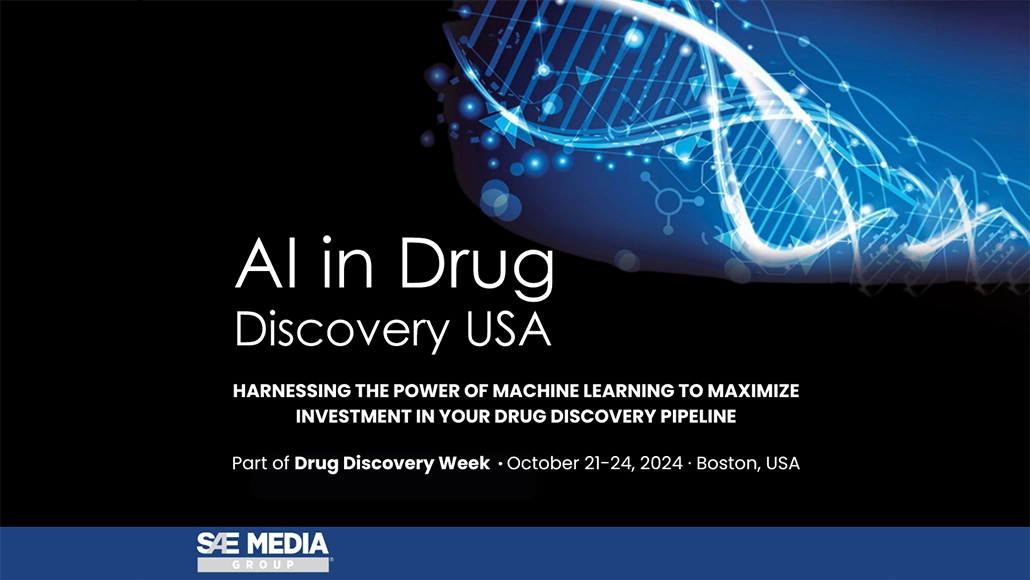
SAE Media Group is proud to announce the release of the official brochure for AI in Drug Discovery 2026, taking place 9–10 March 2026 in London. The newly published agenda highlights how artificial intelligence is transforming pharmaceutical R&D, from early stage pilots to scaled, portfolio wide adoption.

The event arrives at a pivotal moment for the industry. The global market for AI in drug discovery, valued at $1.72 billion in 2024, is projected to soar to $8.53 billion by 2030, underscoring the sector’s rapid evolution and commercial momentum.

AI in Drug Discovery 2026 will showcase real world case studies, new clinical data, and next generation platforms delivering measurable gains in speed, cost efficiency, and hit quality across global research teams.

Key themes include:

  • Foundation models for target identification and disease understanding
  • LLMs in computational chemistry and molecular design
  • Advanced cell models and simulations enabling animal reduction in preclinical research
  • Practical strategies for scaling AI systems across global R&D portfolios
  • Addressing barriers to full AI integration including data quality, interoperability, regulatory alignment, and ethical, explainable outputs
  • Market outlook and investment trends as AI drug discovery accelerates toward $8.5B by 2030

“This year’s brochure captures a pivotal moment for AI in pharma,” said Katie Ogden, Portfolio Manager at SAE Media Group. “We are seeing a shift from experimentation to execution, where AI is no longer a future promise but a present-day driver of competitive advantage.”

Peter Clark, Conference Chair and VP, Computational Drug Design at Novo Nordisk said “Unlocking the full potential of AI in drug discovery requires more than technical progress it demands advances in data generation, quality, and automation. This year’s programme reflects that shift, spotlighting the critical enablers that will shape the future of pharmaceutical R&D.”

The programme illustrates a maturing field, with AI now embedded across molecule design, clinical trial optimisation, and preclinical modelling. Attendees will explore how generative AI, multimodal data fusion, and autonomous lab systems are reshaping the drug development pipeline.

Early bird registration is now open. Delegates who book before 7 November 2025 will save £400 on their pass.

View the brochure and secure your place – https://www.smgconferences.com/pharmaceuticals/uk/conference/drug-discovery


Latest stories

Related stories

Driving Documentation Integrity Through Structured Drug Data

Establishing a robust framework for regulatory success requires moving beyond fragmented information silos toward a unified, digital-first approach. Comprehensive oversight of the pharmaceutical lifecycle depends on the ability to transform raw information into actionable insights, ensuring that every data point contributes to a larger narrative of safety and efficacy. By prioritizing specialized platforms that aggregate and organize complex information, organizations can achieve a level of transparency that satisfies the most stringent global standards while fostering a culture of continuous improvement.

Contamination Control with Toxicological Reference Data

Centralizing expert-verified toxicological datasets is now a critical requirement for modern pharmaceutical facilities operating under stringent global regulations. By transitioning from generic cleaning limits to precise Health-Based Exposure Limits derived from high-quality platforms, manufacturers ensure that cleaning validation protocols are scientifically sound and audit-ready. This approach integrates rigorous toxicological risk assessment into the broader contamination control strategy, safeguarding patient health while optimizing multi-product manufacturing efficiency and regulatory compliance.

Aligning Global Clinical Trials with Standardized Drug Data

Modern drug development necessitates a shift from fragmented data silos to a unified, intelligence-driven framework. Achieving global regulatory alignment requires a sophisticated approach to trial documentation standards and pharmaceutical regulatory governance, ensuring that clinical trial design remains robust across multiple jurisdictions. By leveraging standardized drug intelligence, sponsors can enhance submission readiness and maintain cross-border compliance, ultimately accelerating the delivery of life-saving therapies to patients worldwide.

Advancing Quality 4.0 Through Centralized Drug Knowledge 

Implementation of a unified data framework serves as the catalyst for modernizing pharmaceutical production, bridging the gap between legacy processes and intelligent automation. By consolidating disparate data streams into a cohesive repository, organizations achieve unprecedented visibility into critical quality attributes and process parameters. This transformation facilitates proactive risk mitigation and ensures that Good Manufacturing Practices are maintained through high-fidelity insights rather than retrospective analysis, ultimately fostering a culture of continuous improvement and operational excellence.

Subscribe

- Never miss a story with notifications

- Gain full access to our premium content

- Browse free from any location or device.

Media Packs

Expand Your Reach With Our Customized Solutions Empowering Your Campaigns To Maximize Your Reach & Drive Real Results!

– Access theMedia Pack Now

– Book a Conference Call

Leave Message for Us to Get Back

Translate »