















Regulatory expectations across the life sciences industries are changing, with more focus on clear and measurable exposure data. Starting from early-stage drug development through to large-scale manufacturing, you are expected to show how chemical, biological and physical agents may affect both your products and the people working with them. That is why controlled exposure simulation has become essential in modern laboratories.
It allows you to recreate real-world conditions in a controlled setting so you can measure exposures, validate controls and make decisions based on clear, reproducible data. Below is an overview of controlled exposure simulation in modern laboratories, supported by expert insights from RHP Risk Management — a leader in exposure science and industrial hygiene.
What Is Controlled Exposure Simulation?

Many exposure scenarios in pharmaceutical and life sciences settings are either too rare, too fast-moving or too high-risk to study as they naturally occur. Controlled exposure simulation offers a solution by allowing you to recreate these conditions on demand under tightly managed parameters. Through simulation, you can measure exposure to agents like chemical vapors, fumes, gases and biological materials with more precision.
There is a wide range of variables you can adjust in a laboratory setting, such as concentration levels, exposure duration and frequency, temperature, humidity, and airflow. With this level of control, you can generate consistent datasets that support risk assessments and safety evaluations.
Why Is Controlled Exposure Simulation Important in Modern Laboratories?
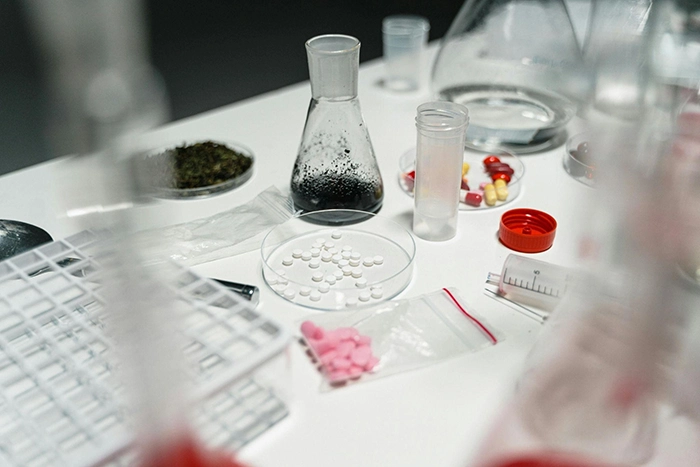
Controlled exposure simulation helps you study exposure scenarios in a safe, efficient and reliable way. Here is why it is important in modern laboratories:
- Safety and risk mitigation: You can assess potentially harmful exposure scenarios without putting people at risk, supporting your responsibility for worker health and safety.
- Fewer ethical constraints, faster timelines: Your researchers can use simulation to mimic exposure to contaminants. This reduces ethical concerns around intentional exposure and avoids the time necessary to recruit and train participants. Thus, you can collect data more quickly.
- Consistent and reliable data: You can repeat the same conditions as many times as necessary, helping you produce consistent datasets that support accurate risk assessments and decision-making. Plus, the systems used to simulate exposure can be reused in future studies, which means you can generate comparable data across different scenarios.
- Operational efficiency and cost-effectiveness: With a simulated environment, you can test and retest without the high costs of building real-world prototypes or conducting dangerous live trials.
- Regulatory compliance: Simulation tools give you invaluable data to verify compliance with safety regulations. For example, you can use the tools to manage over 1,000 chemicals listed under California Proposition 65 by evaluating exposure risks and testing for compliance with label requirements.
These benefits have been proven in various pharmaceutical settings. For example, a recent review found that simulation techniques can help researchers study how drugs interact with delivery systems such as liposomes, polymers, nanoparticles and implantable devices. By simulating these interactions, they can better understand drug behavior and optimize delivery systems before moving into physical testing. According to the study, simulations also enable faster, more cost-effective screening and improve the design and performance of drug delivery systems.
Where Can You Find a Laboratory That Can Simulate Controlled Exposure Conditions?
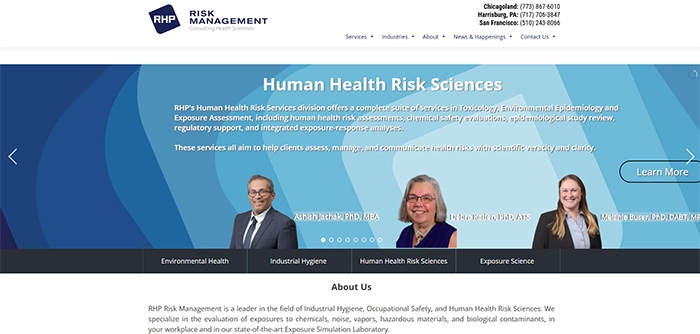
You can typically find controlled exposure simulation through specialized providers, including independent exposure science laboratories, contact research organizations and risk management firms with dedicated facilities. The most effective partners are those who can apply the science directly to real-world operations with clarity and speed. In practice, this means working with teams that run simulations and connect the findings to workplace conditions, regulatory expectations and day-to-day decision-making.
RHP Risk Management is one such entity that supports pharmaceutical, chemical and consumer product sectors alongside regulatory and legal stakeholders. Its Exposure Sciences Laboratory can simulate realistic product use and chemical releases under controlled conditions, making it possible to evaluate multi-route exposure pathways with a high degree of precision. This is paired with quantitative exposure modeling, personal and area sampling, and structured industrial hygiene programs that align with established standards such as OSHA requirements.
In addition to access to a laboratory, RHP Risk Management also provides access to expertise that can interpret results meaningfully. With Certified Industrial Hygienists and multidisciplinary exposure scientists, the enterprise focuses on producing reproducible data and translating it into organized, defensible conclusions you can use across scientific, regulatory and legal contexts.
Frequently Asked Questions About Controlled Exposure Simulation
The following are some commonly asked questions about controlled exposure simulation.
What industries benefit most from controlled exposure simulation?
Pharmaceuticals, biotechnology and medical device manufacturing benefit significantly from controlled exposure simulation, as these sectors require precise control of environmental and occupational exposures.
Is controlled exposure simulation required for regulatory compliance?
Although it is not always mandatory, it is generally an effective way to demonstrate that your organization understands and manages exposure risks appropriately.
How accurate are simulation-based exposure assessments?
When conducted under controlled conditions and using validated methods, simulations yield highly reliable, reproducible data.
Can simulation labs replicate real-world pharmaceutical environments?
Yes. Advanced facilities can closely model real operational conditions, so you can get realistic and relevant exposure assessments.
Building a Better Future, Faster
Controlled exposure simulation is an essential tool in modern pharmaceutical operations. It allows you to base decisions on measurable, reproducible evidence. Be sure to work with experienced partners so you can take a proactive approach to exposure management that aligns with both regulatory expectations and organizational responsibility.