















Close
CDMO Safety Testing 2026
Novotech

Foetal Development Protein Can Aid Acute Leukaemia Aversion

Note* - All images used are for editorial and illustrative purposes only and may not originate from the original news provider or associated company.

Subscribe

- Never miss a story with notifications

- Gain full access to our premium content

- Browse free from any location or device.

Media Packs

Expand Your Reach With Our Customized Solutions Empowering Your Campaigns To Maximize Your Reach & Drive Real Results!

โ€“ Access the Media Pack Now

โ€“ Book a Conference Call

โ€“ Leave Message for Us to Get Back

Related stories

BeOne Signs $2B Trispecific Antibody Deal with Huahui Health

BeOne Medicines has entered into a high-value agreement with...

Quantum Machine Learning in Pharma Research Growth

The convergence of artificial intelligence and quantum processing is opening new avenues for rapid discovery and innovation within the life sciences. By utilizing advanced mathematical models that operate across multi-dimensional datasets, researchers can now identify complex biological patterns and predict molecular behaviors with a speed that surpasses traditional computational methods. This transformation is accelerating the development of novel therapies and providing deeper insights into disease mechanisms, fundamentally altering the trajectory of pharmaceutical research and development.

Quantum Sensors Enabling Advanced Drug Diagnostics

The landscape of medical diagnostics is being reshaped by the introduction of sensing technologies that operate with atomic-level sensitivity. By providing high-fidelity measurements and real-time data, these tools allow for the detection of subtle biological changes and chemical markers that were previously invisible to conventional equipment. This advancement is enhancing the precision of drug testing and clinical monitoring, leading to earlier disease detection and more effective therapeutic interventions across the global healthcare spectrum.
- Advertisement -

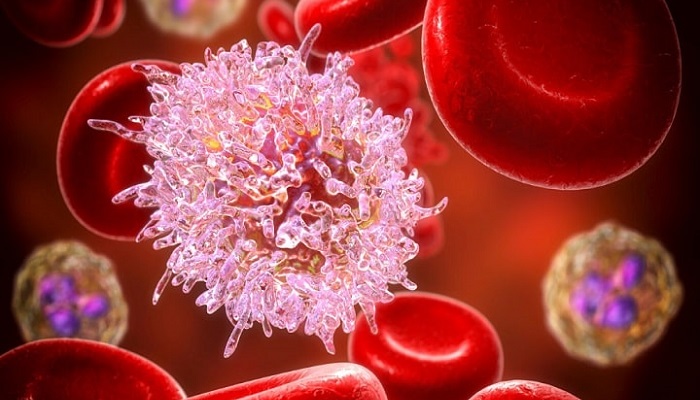
A protein present in foetal development has been zeroed upon by the researchers that has a strong prophylactic effect versus acute myeloid leukaemia- AML.

Right during the foetal pregnancy stage, numerous vital cell programmes become active in the foetal development. As per the new research from Lund University, Sweden, one of these foetal programmes has the capacity to guard against AML. The full findings of the study have already been published in the Cell Reports journal.

AML apparently happens to be a cancer of the white blood cells. Acute leukaemia can be described as a cancer that advances in no time and that does so too aggressively, which in most cases requires urgent treatment. AML gets classified depending on the blood cells that have been affected. There are two major types of blood cells, mainly monocytes and granulocytes, which come from the family of lymphocytes, and myeloid stem cells, which root from lymphoid stem cells. According to Professor David Bryder from experimental haematology at Lund University, they have gone on to make use of an experimental mouse model which always results in leukaemia of this kind. This significantly interesting thing, he adds, is when adult mice gets added to a particular molecular cell programme that usually runs only during the foetal development, and incidentally half of them did not develop any AML.

The foetal programme which came into use by the researchers had the RNA-binding protein named LIN28. The typical function of this kind of protein is to make sure that other genes are regulated. LIN28 is majorly expressed during foetal development and fades away shortly after birth. According to a doctoral student at Bryderโ€™s research group, AML is caused by various cell mutations. As per their research model, they follow progress from the first mutation until the disease has been established, something that is not possible in the case of humans. The mouse study puts out the fact that LIN28 indeed has a strong prophylactic effect.

The foetal development programme can go on to help in treating leukaemia in adults. The researchers had initially taken samples from a huge pool of patients who were diagnosed with AML. There were 98% of patients who had no LIN28 expression, and even those who did, their expression levels were extremely low. The researchers thereafter carried out a more in-depth functional as well as molecular study in the mouse model in order to gauge what happens post-activation of LIN28.

The researchers observed that in mice, the molecular foetal programme went on to protect against the disease by colliding with the AML driving mechanisms. However, according to Bryder, one needs to look into the fact that how can such a programme can be reactivated in human cells.


Latest stories

Related stories

BeOne Signs $2B Trispecific Antibody Deal with Huahui Health

BeOne Medicines has entered into a high-value agreement with...

Quantum Machine Learning in Pharma Research Growth

The convergence of artificial intelligence and quantum processing is opening new avenues for rapid discovery and innovation within the life sciences. By utilizing advanced mathematical models that operate across multi-dimensional datasets, researchers can now identify complex biological patterns and predict molecular behaviors with a speed that surpasses traditional computational methods. This transformation is accelerating the development of novel therapies and providing deeper insights into disease mechanisms, fundamentally altering the trajectory of pharmaceutical research and development.

Quantum Sensors Enabling Advanced Drug Diagnostics

The landscape of medical diagnostics is being reshaped by the introduction of sensing technologies that operate with atomic-level sensitivity. By providing high-fidelity measurements and real-time data, these tools allow for the detection of subtle biological changes and chemical markers that were previously invisible to conventional equipment. This advancement is enhancing the precision of drug testing and clinical monitoring, leading to earlier disease detection and more effective therapeutic interventions across the global healthcare spectrum.

Quantum Computing Optimizing Pharma Supply Chains

The global distribution of pharmaceutical products is facing unprecedented challenges that demand a new level of logistical precision and resilience. By utilizing advanced analytical models, companies can now navigate complex international networks with greater efficiency, ensuring that temperature-sensitive medicines and life-saving therapies reach their destinations without delay. This evolution toward a more intelligent and responsive supply chain is critical for maintaining public health and responding effectively to emerging medical needs on a global scale.

Subscribe

- Never miss a story with notifications

- Gain full access to our premium content

- Browse free from any location or device.

Media Packs

Expand Your Reach With Our Customized Solutions Empowering Your Campaigns To Maximize Your Reach & Drive Real Results!

โ€“ Access theMedia Pack Now

โ€“ Book a Conference Call

โ€“ Leave Message for Us to Get Back

Translate ยป