










Close
Almac
Achema middle east

Anixa Biosciences, OntoChem ink pact to proceed to next stage of development of potential anti-viral therapy for Covid-19

Note* - All images used are for editorial and illustrative purposes only and may not originate from the original news provider or associated company.

Subscribe

- Never miss a story with notifications

- Gain full access to our premium content

- Browse free from any location or device.

Media Packs

Expand Your Reach With Our Customized Solutions Empowering Your Campaigns To Maximize Your Reach & Drive Real Results!

– Access the Media Pack Now

– Book a Conference Call

Leave Message for Us to Get Back

Related stories

First GLP-1 Pill for Obesity by Novo Nordisk Approved by FDA

The U.S. Food and Drug Administration – FDA on...

How High-Achievers Stay Future-Ready in Evolving Job Markets

Job markets today are transforming rapidly. In the past...

Proactive Risk Management as a Core Capability in Pharma Development

Risk management in pharma is often treated as a reactive compliance box-ticking exercise. This article argues for reframing risk as a strategic competitive advantage. It details proactive frameworks like the "Excipient Exclusion Filter," Decision Quality (DQ) matrices, and "pre-mortem" analyses that allow development teams to anticipate failure modes and engineer them out of the pipeline before they occur.
- Advertisement -

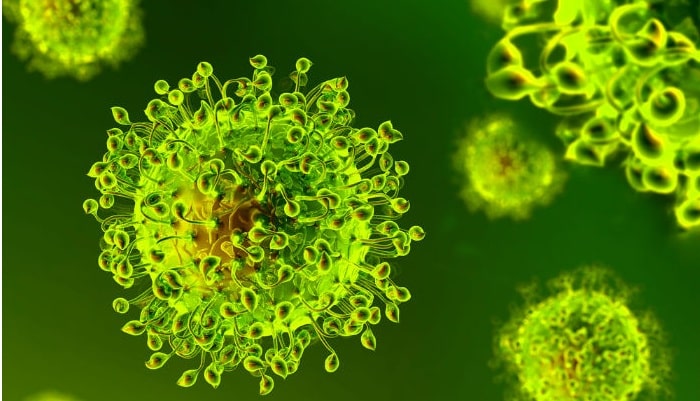
Anixa Biosciences, Inc., a biotechnology company focused on the treatment and prevention of cancer and infectious diseases, announced that based on Proof of Concept (POC) animal study results, it will progress to the next stage of development of its potential anti-viral therapy for Covid-19.

Anixa and OntoChem are seeking to develop an orally administrable, room-temperature stable, anti-viral therapy against SARS-CoV-2, the virus that causes Covid-19. The partners have recently completed POC studies in a Syrian Hamster model of the Covid-19 disease. Two potential compounds were evaluated as well as remdesivir. Data showed that administration of the drugs to infected hamsters did not cause any noticeable adverse effects, and monitoring of weight and general animal behavior demonstrated comparable efficacy of both Anixa compounds as well as remdesivir. Viral shedding data and autopsied lung inflammation analysis was inconclusive for all drugs tested, perhaps due to the animal model being inadequate for such data.

Dr. Amit Kumar, president and CEO of Anixa Biosciences, stated, “Based on the promising preliminary data in the animal study, we have made the decision to proceed to the next stage of drug development. We have chosen one compound around which we will perform combinatorial synthetic medicinal chemistry to evaluate whether we can increase potency and optimize pharmacokinetics. The most promising compounds will again be evaluated in both in vitro and in vivo studies.”

“We expect this next phase of development to take roughly four to five months with another decision point at that time,” said Dr. Lutz Weber, CEO of OntoChem. “We are pleased that our progress to date has been successful and we are looking forward to the next phase of development.”

Anixa is a publicly-traded biotechnology company developing a number of programmes addressing cancer and infectious disease. Anixa’s therapeutics portfolio includes a cancer immunotherapy programme which uses a novel type of CAR-T, known as chimeric endocrine receptor T-cell (CER-T) technology, and a Covid-19 therapeutics programme focused on inhibiting certain viral protein function.
Latest stories

Related stories

First GLP-1 Pill for Obesity by Novo Nordisk Approved by FDA

The U.S. Food and Drug Administration – FDA on...

How High-Achievers Stay Future-Ready in Evolving Job Markets

Job markets today are transforming rapidly. In the past...

Proactive Risk Management as a Core Capability in Pharma Development

Risk management in pharma is often treated as a reactive compliance box-ticking exercise. This article argues for reframing risk as a strategic competitive advantage. It details proactive frameworks like the "Excipient Exclusion Filter," Decision Quality (DQ) matrices, and "pre-mortem" analyses that allow development teams to anticipate failure modes and engineer them out of the pipeline before they occur.

Aligning Scientific Innovation with Commercial Reality in Drug Development

The "Valley of Death" in pharma is no longer just about scientific failure; it is about commercial irrelevance. This article examines the critical need to align R&D ambition with market reality early in development. It explores the evolution of the Target Product Profile (TPP) into the Target Value Profile (TVP), the role of the "commercial scientist," and strategies for integrated evidence generation that satisfy both regulators and payers.

Subscribe

- Never miss a story with notifications

- Gain full access to our premium content

- Browse free from any location or device.

Media Packs

Expand Your Reach With Our Customized Solutions Empowering Your Campaigns To Maximize Your Reach & Drive Real Results!

– Access theMedia Pack Now

– Book a Conference Call

Leave Message for Us to Get Back

Translate »