







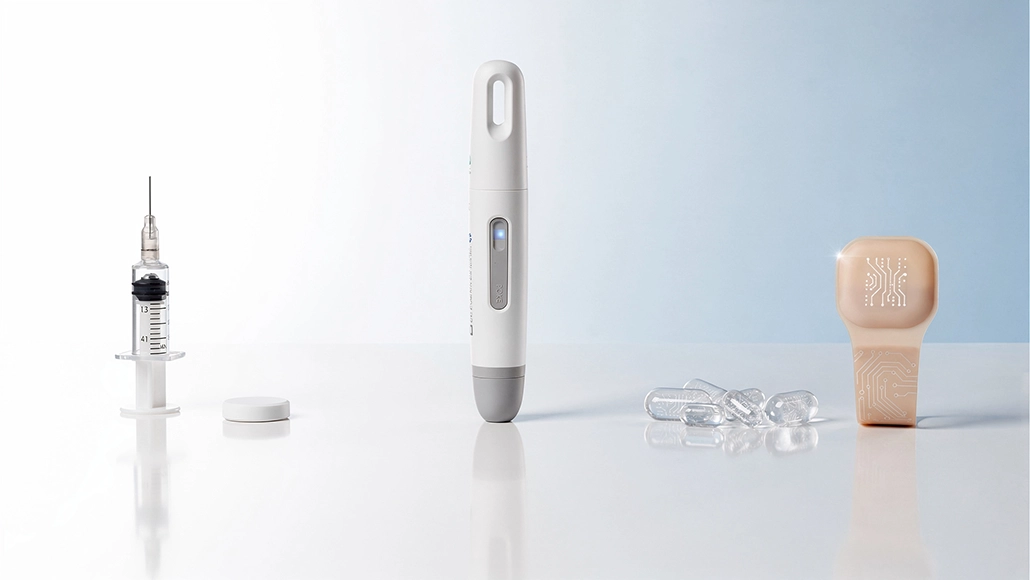
The pharmaceutical industry stands at the threshold of a new era, one where the distinction between the “drug” and the “delivery system” is rapidly disappearing. For decades, the pill and the syringe were the dominant symbols of medicine, serving as simple, passive conduits for active chemical ingredients. However, as we look toward the future, these traditional formats are being replaced by highly sophisticated pharmaceutical drug delivery platforms that are as technologically advanced as the molecules they carry. Driven by breakthroughs in nanotechnology, digital health, and synthetic biology, the field is moving toward a model of “intelligent therapeutics” systems that are not just containers for medicine, but active, responsive, and data-driven partners in patient care.
The motivation behind these future drug delivery trends is clear: the need for greater precision, improved patient adherence, and the successful administration of complex, sensitive biologics. As our understanding of disease moves to the molecular and genetic levels, our delivery tools must follow suit. We are no longer content with systemic distribution and “hit-or-miss” dosing. Instead, the industry is investing heavily in drug delivery research to create platforms that can navigate the body’s internal geography with the precision of a GPS, releasing their payload only when and where it is most needed.
The Rise of Smart Drug Systems and Closed-Loop Delivery
One of the most transformative future trends in pharmaceutical drug delivery platforms is the integration of “intelligence.” Smart drug systems are being developed that can monitor biological markers in real-time and adjust the delivery of medication accordingly. This “closed-loop” approach is already becoming a reality in diabetes management, where continuous glucose monitors are linked to automated insulin pumps. However, the future holds much more; researchers are working on “bio-responsive” materials that can sense a flare-up of inflammation or the presence of specific cancer biomarkers and automatically trigger the release of a localized therapeutic dose.
This shift moves medicine from a reactive to a proactive state. Instead of waiting for a patient to feel a symptom and take a pill, these advanced therapeutics will address the problem before the patient is even aware of it. This level of autonomy in drug delivery has the potential to drastically reduce side effects, as the drug is only present in the body when it is needed. Furthermore, by maintaining the patient within a narrow, optimal therapeutic window, these smart platforms will improve the efficacy of existing treatments, turning manageable conditions into virtually invisible ones.
3D Printing and Point-of-Care Customization
The future of pharmaceutical drug delivery platforms is also being shaped by the move away from centralized mass production toward decentralized, personalized manufacturing. 3D printing technology is at the heart of this trend, allowing for the creation of customized dosage forms that are tailored to an individual patient’s weight, metabolism, and genetic profile. In the future, a “pharmaceutical printer” in a hospital or even a local pharmacy could produce a single tablet containing a unique combination of multiple medications, each with a different release rate designed to match the patient’s daily rhythm.
This level of customization is a major pillar of future drug delivery research. It addresses the “one-size-fits-all” limitation of current manufacturing, which often leaves pediatric, geriatric, and rare-disease patients with few options. Beyond dosage, 3D printing allows for the creation of complex internal structures that can control drug release in ways that are impossible with traditional compression methods. We may soon see “geometry-based” delivery, where the shape of the pill itself determines how fast it dissolves, providing a level of physical control that adds a new dimension to formulation science.
Nanobots and Autonomous Therapeutic Navigators
Perhaps the most futuristic trend in the field is the development of autonomous nanomachines, often referred to as nanobots. These are infinitesimal systems, often built from DNA or synthetic polymers, that can navigate the bloodstream, identify diseased cells, and perform localized tasks like drug release or even micro-surgery. While still largely in the laboratory phase, the progress in this area of advanced therapeutics is accelerating. These “molecular robots” represent the ultimate realization of targeted delivery, offering the potential to treat cancer, cardiovascular blockages, and neurodegenerative diseases with zero systemic exposure.
The challenges of powering and controlling these nanobots are being addressed through innovative drug delivery research using magnetic fields, ultrasound, and even the body’s own chemical gradients. As these platforms become more refined, they will move us closer to the ideal of “surgery without the knife,” where the delivery system itself performs the intervention at the cellular level. This convergence of robotics and biology is set to redefine the boundaries of what is medically possible, turning science fiction into the next generation of standard care.
Digital Pills and the Connectivity of Health
The digitalization of healthcare is also giving rise to “connected” pharmaceutical drug delivery platforms. Digital pills tablets embedded with a tiny, ingestible sensor can now track exactly when a medication has been taken and transmit that data to a patient’s smartphone or their doctor’s office. This technology directly addresses the global problem of non-adherence, which costs healthcare systems billions of dollars and leads to countless preventable hospitalizations. By providing a transparent and verifiable record of medication use, digital pills empower both patients and providers to better manage chronic disease.
Furthermore, wearable delivery devices are becoming increasingly “smart.” Future drug delivery systems will not only administer medication but also gather data on the patient’s physiological response, creating a continuous feedback loop. This data can be analyzed by artificial intelligence to refine the treatment plan in real-time, identifying patterns and predicting potential issues before they become clinical problems. This interconnectivity is a hallmark of the future of pharma platforms, moving us toward a more holistic, data-driven, and ultimately more effective model of healthcare.
Sustainability and the Green Future of Drug Delivery
As we look toward the future, the environmental impact of pharmaceutical drug delivery platforms is also becoming a major focus. The industry is under increasing pressure to reduce waste and move toward more sustainable materials. This includes the development of biodegradable delivery devices and the reduction of single-use plastics in parenteral delivery. Future drug delivery research is investigating the use of bio-derived polymers and reusable “smart” applicators that can be reloaded with medication, minimizing the footprint of modern therapeutics.
The shift toward more efficient delivery also contributes to sustainability. By ensuring that more of the drug reaches its target and less is wasted through systemic distribution and excretion, we are reducing the amount of active pharmaceutical ingredients that end up in the environment. This “green” approach to drug delivery is not just an ethical choice but a practical necessity for an industry that is increasingly being held accountable for its environmental impact. The future of medicine will be defined as much by its sustainability as by its technological prowess.
The journey toward the future of pharmaceutical drug delivery platforms is one of profound convergence. By bringing together the best of biology, engineering, and digital technology, we are building a toolkit that is as complex and adaptable as the human body itself. These next-generation systems will make treatments safer, more effective, and more profoundly personalized, ensuring that the incredible potential of modern molecular science is never lost in the journey from the laboratory to the patient. The future of drug delivery is not just about moving molecules; it is about building the bridges that will carry us into a new era of health and healing.