












Inventory management is the work that laboratorians do on a daily basis that is both the most important and the most loathed. This is because inventory management is both the most essential and the most disliked duty. However, ineffective management of the inventory has a domino effect on practically every aspect of the laboratory.
Efficiency, accuracy and reproducibility in research are all important factors.
When it comes to research, delays are often a repercussion of inadequate inventory management. This is because of the complexity of the situation. Whether the chemicals and reagents have been used up or have not been reordered, orders have been delayed, or goods have gone missing, tests are postponed until the replacements arrive. This may happen for a number of reasons. When it comes to reagents, supplies, or even equipment that has to be repaired, unproductive downtime that is spent waiting is a source of irritation for laboratory technicians all over the world.
It is possible to prevent this situation by maintaining up-to-current inventories that are equipped with automatic reminders for essential repairs, restocks, and other alerts. This will ensure that the laboratory is always up to date with regard to the operations that take place on a daily basis.
Both safety and compliance are expected.
By using chemicals that have expired or that have been poorly handled, laboratories run the risk of losing their compliance as well as their regulatory status, which results in the need of reapplication. When it comes to future publications, this would result in findings that are worthless since they would be seen as untrustworthy and, at the same time, they would not be able to be reproduced. Compliance requires the monitoring of inventory, the disposal of hazardous items, and the maintenance of records in a dependable and careful manner. If any of these things are lacking, it may lead to an elevated audit risk as well as fines connected with it. In addition to this, materials that have been kept improperly or that have expired may also be hazardous if they become unstable or even if they cause the containers in which they are stored to undergo some form of breakdown. It is possible for there to be a potential threat to the safety of the laboratory workers if the equipment is not properly maintained and also if it is not frequently examined by persons who are competent.
Laboratory Staff in Addition to Relationships with Suppliers
It should be brought to everyone’s attention that when the materials and equipment from the laboratory are inadequate for the task, those relationships suffer. In addition to the time that is lost looking for the items that are missing, poor inventory management may also lead to the straining of relationships with the suppliers as a result of order irregularities, delayed payments that are delayed, and returns.
Improvements Made to Inventory Management
In terms of inventory management, there are a variety of strategies that may be used, including the following:
Management of inventories in the LIMS style
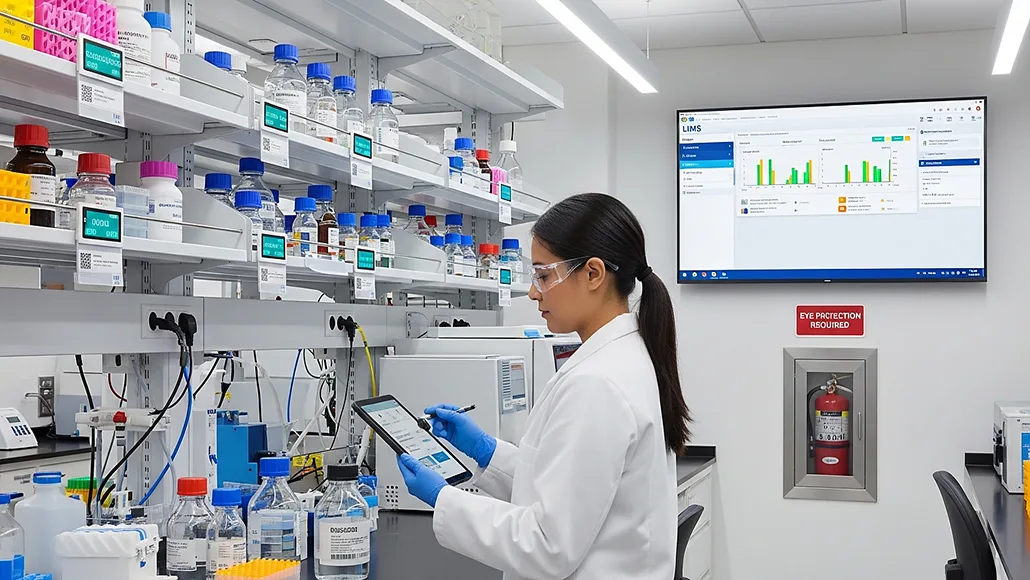
A variety of LIMS-style programs have been created in order to assist labs in moving forward with the process of addressing the issues that have been outlined above. These LIMS-style applications are referred to as laboratory information management systems. As a matter of fact, these applications provide a multitude of advantages that assist the management of the laboratory in making choices about inventory that are more data-driven.
Reminders to reorder that are automated
LIMS systems may go on to remind one to refill things at ideal periods, which are based upon prior consumption rates or even the order dates. This protects against both overstocking and running out of materials, which is something that should be taken into consideration.
Improve your day-to-day productivity
One can also make use of analytics in order to go ahead and optimize the storage strategy. This will allow one to have the necessary space in terms of arriving materials before they arrive, and it will also save one from having to reorganize the items that are frequently supplied. The monitoring of batch numbers is a vital practice in diagnostic laboratories; however, it may also be beneficial for research laboratories to follow suit and carry out the same practice. When batch numbers are recorded, it is much simpler to identify the experimental issues that are brought on by contamination. This is because finding the source of the contamination is much simpler.
This eliminates the need to seek for supplies, since the storage location is noted upon arrival in the inventory. Another benefit of careful inventory management is that it eliminates the need to search for materials.
Utilizing Results from the Past in Order to Provide Justification for Future Expenses
It is a well-known truth that the data from the previous inventory management system may be used to make the budget proposals more understandable and even provide the lab managers with the ability to explain their decisions. When preparing for future projects, staffing, budgeting, and other aspects of the business, having the data necessary to make educated choices about inventory makes it possible to eliminate the element of guessing from the planning process.
Alternative Options Available for the Management of Inventory
In addition to the software that is created for the purpose of information collecting, there are other methods that may be used in order to keep inventory management in an organized and up-to-date manner. These methods include the utilization of barcodes, the maintenance of tracking sheets with equipment, and the development of standard operating procedures that explain the storage needs.
It is necessary to enhance the degree of asset management as well as material management in proportion to the size and complexity of the laboratory. An evaluation of the requirements and an analysis of the many different approaches to inventory management may be carried out in order to optimize the time that is allocated to the laboratory personnel. This is accomplished by ensuring that the productivity and efficiency of the laboratory are not inhibited as a result of inferior inventory management.