



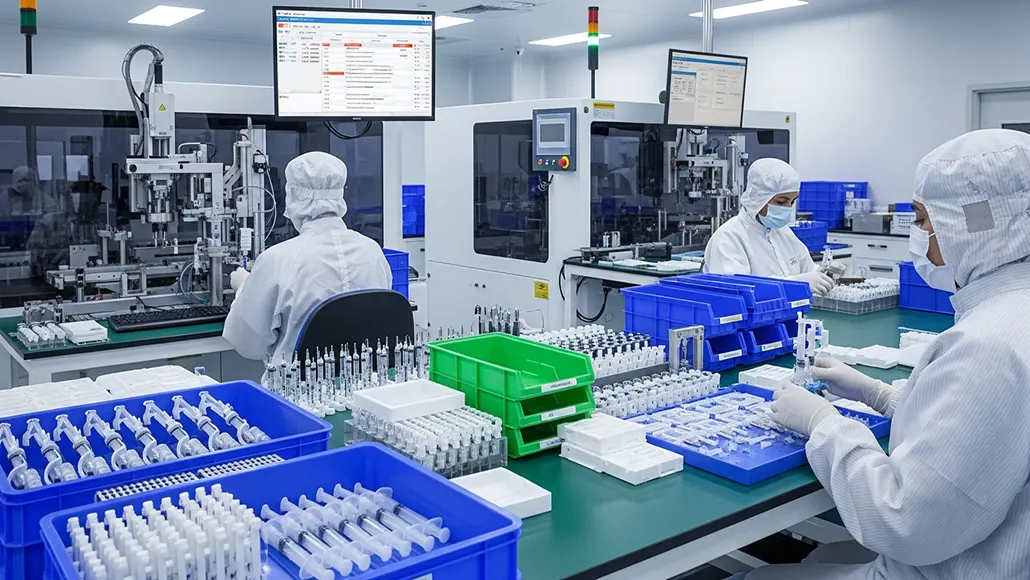
As the pharmaceutical and MedTech industries face growing pressure to accelerate development timelines while managing increasing product complexity, the role of integrated partners has never been more critical. In this featured interview with World Pharma Today, Jason Anderson, CEO of Ensera, shares insights into how the company’s design-to-manufacture model is reshaping drug delivery and combination product development. He discusses the value of early design integration, digital quality systems, and agile global manufacturing in reducing risk, improving speed to market, and supporting next-generation patient-centric delivery solutions.
Shaping the future of drug delivery: Ensera on delivering bold solutions for modern drug delivery challenges
As the pharmaceutical and MedTech industries evolve, so too must the nature of partnership with trusted suppliers. Ensera, formerly SteriPack, is at the forefront of that outsourcing evolution with an integrated global model that spans early-stage device design to manufacturing and secondary packaging.
By breaking down the silos that traditionally exist between device development and manufacturing, Ensera is enabling faster, smarter pathways to market for the next generation of drug delivery devices and combination products.
In this recent conversation with World Pharma Today, CEO Jason Anderson reflects on the company’s direction, how its design-to-manufacturing capabilities are delivering value to clients, and why speed, flexibility and depth matter more than ever.
-
Can you tell us more about Ensera’s integrated design-to-manufacture model and how it differs from traditional CDMO approaches?
One thing that’s different about us is how we interpret the ‘D’ in CDMO. In many traditional models, design for manufacturing usually comes into play later in the process, once the product is largely defined and needs to be adapted for manufacturability.
In our case, the ‘D’ refers to full product design and development. It’s a standalone business within the group, with real legacy and depth. We get involved at the very beginning, even at the napkin sketch stage, and our team includes mechanical, electrical, software engineers, industrial designers, and human factors experts. To have that level of design consultancy expertise sitting side by side with our manufacturing operations is pretty special, and shapes how we’re able to work with clients to optimize their design and manufacturing outcomes from the very outset of a project.
-
What types of development programs or product formats are best suited to benefit from this model?
Pretty much any program that ends in commercialization benefits from thinking about manufacturability early. If you’re developing a device and you’re thinking about the production process from the start, you avoid all kinds of issues down the line. That leads to faster timelines, better commercial viability and more consistent manufacturing, and increases the odds of a successful market launch.
-
How does early integration between design and manufacturing help reduce development risks or shorten timelines?
Design is iterative. You’re solving a problem with lots of constraints, but when manufacturing is involved early, you get those constraints on the table right away. You make better trade-offs and avoid going down the wrong path.
The analogy I use is a maze. If you know what’s at the end of each turn early on, you can avoid dead ends and choose the better path up front. That saves time and limits the chance of having to go back and rework a bunch of decisions.
-
Ensera serves both large pharma and emerging biotech. How do you tailor your services to meet the different needs of these client groups?
We tailor the way we work to each customer. The level of service is always high, but we adjust how we deliver based on what they need.
With large pharma, we might be one part of a bigger supply chain, providing specific design, final assembly or secondary packing capabilities as needed. With biotech or mid-sized companies, we may support a much broader scope of activities. But in every case, our focus is the same: fast, flexible, high-quality execution. Our supply chain model is built for agility, which matters across the board.
-
Can you share some examples of how the model has worked in practice?
We’ve worked with one client on a very unique drug delivery device. They had some ideas to improve the design and we collaborated to develop and validate a new version, then transferred it into manufacturing quickly and smoothly. Our understanding of the current product and process made that possible.
In another case, we’re currently working with a very large pharma company that has big internal design and manufacturing teams. They came to us thinking this development process would take five or six years. But by keeping it within our integrated model, where communication and alignment across functions are much simpler, we believe we can get it done in just two to three years.
-
How does Ensera ensure consistency and regulatory alignment across its global network, particularly when navigating different regional requirements?
Our sites are all ISO 13485 certified and operate under a shared global Quality Management System (QMS). We also have an integrated Quality Assurance and Regulatory Affairs (QARA) team across our design and manufacturing locations.
That structure helps ensure consistency across the business. It also allows us to adapt to our customers’ systems when needed. We maintain our own standards, but we’re also set up to work within theirs. That flexibility is important when you’re working with customers who have established Quality Management Systems of their own.
-
What role do digital tools or data systems play in maintaining quality and knowledge transfer across the product lifecycle?
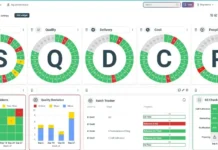
Digital tools and systems are critical to maintaining data integrity and knowledge transfer. Our Manufacturing Execution System (MES) and QMS are connected and deployed across all sites, providing a consistent digital backbone that supports quality performance globally.
Those systems manage everything from operator training to batch history. Operators can’t start on a line unless they’re up to date on training, and the system enforces that.
These tools also help us manage high-mix, low-volume production more efficiently. We’ve designed our systems to handle small batch sizes and quick changeovers with low manual input. That’s not easy to do without having a solid digital foundation in place.
-
How do you see trends like combination products, biologics or connected devices shaping the future of design-for-manufacture strategies?
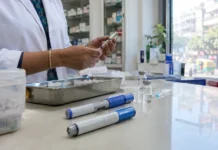
We’ve experienced a rapid adoption and growth of self‑injection and patient‑administered delivery systems. That trend has been building for some time, driven by a growing number of biologics on the market and increasing access through biosimilars. When you put those things together, it creates a real need for faster and more flexible ways to deliver therapies to patients, particularly in at‑home settings.
We see two main directions emerging. On one side, platform drug delivery companies offer proven, cost-effective systems like autoinjectors, which are a great fit for many therapies. But as more complex therapies come to market, not all of them work with standard devices.
That’s where we see growing demand for fit-for-purpose and intended use of delivery systems tailored to the therapy. In those cases, early integration between design and manufacturing is critical.
Keeping commercial, manufacturing and supply chain considerations in mind from the start improves the chances of success and helps avoid late-stage issues.
-
Looking ahead, what areas of innovation or capability growth is Ensera focusing on to stay ahead of evolving market needs?
First and foremost, we’re investing in our people, developing our current teams and bringing in new talent to support growth. We’re also building more infrastructure, adding capacity and bringing more capabilities in-house. That includes new equipment to produce more components for drug delivery devices, increasing both capacity and flexibility. These investments span both our medical device and pharmaceutical services, aligning with where the market is headed.
On the pharma side specifically, we’re enhancing combination product assembly, labeling, serialization and aggregation. We’ve also expanded cold chain infrastructure to support biologics and temperature-sensitive drugs.
And alongside organic growth, we’re exploring partnerships, and where appropriate, acquisitions, to help us build complementary capabilities. Our goal is to keep advancing what we can offer while staying true to the agility and quality our customers rely on.