





Specialized Laboratory Equipment Requirements for Biologics and Biosimilar Development
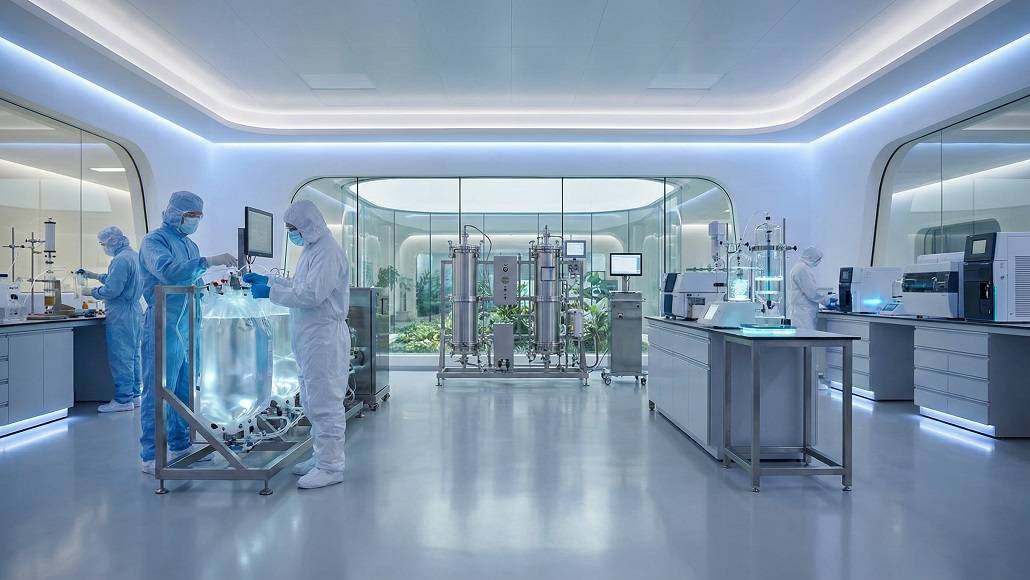
The pharmaceutical world has pivoted from simple chemical synthesis to the cultivation of complex living systems. Biologics—drugs derived from living organisms—and their follow-on counterparts, biosimilars, now dominate the pipeline of new therapies. However, these large, heterogeneous molecules present unique challenges that traditional chemistry lab equipment cannot address. The result is a surging demand for specialized biologics development and characterization equipment, a category of instrumentation designed to handle the fragility, complexity, and variability of biological production. This shift requires a reimagining of the R&D laboratory, moving from standard fume hoods to highly controlled bioprocessing suites.
Upstream Processing: The Revolution in Bioreactors
At the heart of biologics development is the bioreactor, the vessel where cells are coaxed into producing therapeutic proteins. In the R&D phase, the trend is shifting decisively away from large, rigid stainless steel tanks towards high-throughput, single-use systems.
Single-use bioreactors (SUBs) have revolutionized the development workflow. By utilizing pre-sterilized, disposable liners, labs can switch between different cell lines—such as CHO (Chinese Hamster Ovary) or HEK (Human Embryonic Kidney) cells—without the need for time-consuming cleaning and validation cycles (CIP/SIP). This agility is particularly vital for biosimilar developers, who must run parallel experiments to “tune” their process to match the innovator’s quality profile. The ability to rapidly test different clonal variations in the same physical footprint accelerates the critical cell line development (CLD) phase, which is often the bottleneck in biopharma projects.
Furthermore, the emergence of specialized biologics development and characterization equipment in the upstream space includes microbioreactor systems. These automated platforms can run 24 to 48 parallel mini-cultivations in volumes as small as 15 milliliters. They allow scientists to screen media formulations, feed strategies, and pH conditions simultaneously, generating massive datasets that predict how a process will perform at the 2,000-liter commercial scale. This “scale-down” capability is essential for defining the Design Space (QbD) required by regulators, ensuring that quality is built into the process from the very first experiment.
Downstream Processing: Purification Precision
Once the protein is produced, it must be extracted and purified—a task that is arguably more difficult than the synthesis itself. Downstream processing equipment in the R&D lab mimics the industrial scale but prioritizes flexibility.
Modern chromatography systems for biologics are designed to handle a wide range of purification modalities, from affinity chromatography (Protein A) to ion exchange and hydrophobic interaction. The key requirement here is versatility. R&D systems must be able to switch between different column sizes and resin types rapidly. Additionally, tangential flow filtration (TFF) systems are critical for concentrating the product and exchanging buffers.
Unlike small molecules, proteins can denature or aggregate if mishandled. Therefore, downstream equipment must be engineered with “low-shear” pumps and gentle flow paths to preserve the structural integrity of the molecule. The integration of inline sensors for pH, conductivity, and UV absorbance allows for real-time monitoring of the purification process, ensuring that only the highest quality fraction of the protein is collected. This real-time feedback loop allows process engineers to optimize yield without compromising purity, a delicate balance in the high-cost world of biologics manufacturing.
The Analytical Challenge: Proving Biosimilarity
For biosimilar developers, the “product is the process.” But proving that a biosimilar is highly similar to the reference product requires an arsenal of analytical firepower. This is where specialized biologics development and characterization equipment truly differentiates itself.
Standard HPLC is often insufficient for the nuanced analysis of monoclonal antibodies (mAbs). Instead, labs rely on Ultra-High-Performance Liquid Chromatography (UHPLC) coupled with high-resolution Mass Spectrometry (HRMS). These hybrid systems can dissect a protein into its constituent peptides, identifying subtle differences in glycosylation patterns (sugar structures attached to the protein) that could affect immunogenicity or efficacy.
Another critical tool is Surface Plasmon Resonance (SPR) technology. SPR machines measure the binding affinity between the drug and its target receptor in real-time, without labels. For a biosimilar, showing that it binds to the target with the same “on-rate” and “off-rate” as the innovator drug is a key piece of the regulatory puzzle. It provides the functional evidence that complements the structural data, building a “totality of evidence” case for regulatory approval.
Aggregation and Particle Analysis
One of the greatest risks in biologics is aggregation—where protein molecules clump together, potentially causing severe immune reactions in patients. Detecting these aggregates requires specialized light scattering instruments (Dynamic Light Scattering – DLS) and Micro-Flow Imaging (MFI) systems.
Unlike standard particle counters used in small molecule QC, these instruments must distinguish between a protein aggregate, a silicone oil droplet, and an air bubble. Advanced imaging software integrated into these tools allows researchers to visualize the morphology of sub-visible particles, providing critical feedback to formulation scientists trying to stabilize the drug. This level of scrutiny is now a regulatory expectation, pushing labs to invest in high-sensitivity imaging technologies that can see the invisible.
Conclusion
The development of biologics is an exercise in managing complexity. From the living cells in the bioreactor to the final polished protein in the vial, every step introduces variables that must be controlled and understood. The suite of specialized biologics development and characterization equipment—spanning automated upstream cultivators, gentle purification skids, and atomic-level analytical engines—provides the infrastructure necessary to navigate this complexity. For companies aiming to capture a share of the booming biologics and biosimilars market, investment in this specialized toolkit is not optional; it is the prerequisite for innovation. As the industry moves towards even more complex modalities like cell and gene therapy, the reliance on these advanced technologies will only deepen, marking a permanent evolution in the pharmaceutical laboratory.