




Close
Smartlab Europe
Inizio Ignite

Recipharm and LIDDS establish industrial manufacturing capabilities for a novel prostate cancer product

Note* - All images used are for editorial and illustrative purposes only and may not originate from the original news provider or associated company.

Subscribe

- Never miss a story with notifications

- Gain full access to our premium content

- Browse free from any location or device.

Media Packs

Expand Your Reach With Our Customized Solutions Empowering Your Campaigns To Maximize Your Reach & Drive Real Results!

– Access the Media Pack Now

– Book a Conference Call

Leave Message for Us to Get Back

Related stories

Predictive Analytics in Labs: Driving Smarter Decisions in Pharma

The application of statistical algorithms and machine learning techniques to historical research data is enabling scientists to anticipate experimental outcomes and identify emerging patterns with unprecedented accuracy. By moving from a retrospective view of data to a forward-looking perspective, research facilities can optimize their strategies and focus their resources on the most promising therapeutic avenues.

IoT Applications Enhancing Laboratory Operational Efficiency

The integration of internet-connected sensors and smart devices is fundamentally reshaping how research facilities monitor their environment and manage their instrumentation. By providing a constant stream of real-time data, these technological advancements allow for a more granular level of control over laboratory operations, ensuring that the delicate conditions required for high-stakes pharmaceutical research are maintained with absolute precision.

Optimizing Pharma Workflows with Integrated Lab Software Solutions

The modern laboratory environment requires a unified approach to data management and process control to remain competitive. By bridging the gap between disparate instruments and legacy databases, research facilities can eliminate operational silos and create a high-speed environment where innovation is no longer hindered by fragmented digital infrastructure.
- Advertisement -

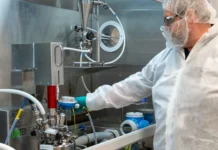
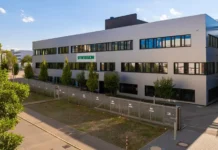
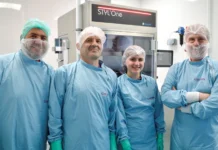
Recipharm, the contract development and manufacturing organisation (CDMO), and LIDDS have together set up a manufacturing line for LIDDS’ novel prostate cancer drug, Liproca® Depot, at Recipharm in Solna, Sweden.

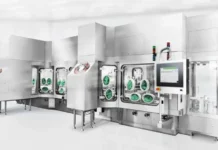
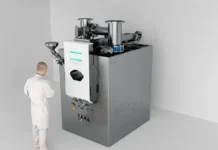
The manufacturing line is dedicated to the first product based on LIDDS’ innovative NanoZolid® technology. Clinical trial material has already been produced and the facility is ready for future commercial manufacturing of Liproca® Depot or other pharmaceutical formulations based on the NanoZolid® technology. The manufacturing line has been adapted for GMP production and is industrialised according to a unique process invented by LIDDS, involving the installation of novel equipment that is new to the pharmaceutical industry.

”We are proud of having reached this important milestone in the development of a new product allowing improved therapy for a serious disease. This has been achieved by the hard work and close collaboration of experts at both LIDDS and Recipharm. LIDDS is a very innovative company and it has been extremely rewarding to work with the team”, says Torkel Gren, General Manager of Recipharm’s facility in Solna.

”With the successful manufacturing performed at Recipharm, LIDDS can offer license agreements for Liproca® Depot with the advantage of having validated production in place, saving both time and money for pharma companies. In addition, we now have an established manufacturing facility ready for other NanoZolid® projects”, says Monica Wallter CEO of LIDDS.

Contact information 
Torkel Gren,
General Manager,
torkel.gren@recipharm.com
+46 (0)8 6024 560 

Monica Wallter,
CEO,
monica.wallter@liddspharma.com
+46(0)73 7070 922

About Recipharm
Recipharm is a leading Contract Development and Manufacturing Organisation (CDMO) in the pharmaceutical industry employing around 5,000 employees. Recipharm offers manufacturing services of pharmaceuticals in various dosage forms, production of clinical trial material and APIs, and pharmaceutical product development. Recipharm manufactures several hundred different products to customers ranging from big pharma to smaller research and development companies. Recipharm’s turnover is approximately SEK 5.3 billion and the company operates development and manufacturing facilities in France, Germany, India, Israel, Italy, Portugal, Spain, Sweden, the UK and the US and is headquartered in Stockholm, Sweden. The Recipharm B-share (RECI B) is listed on Nasdaq Stockholm.

For more information on Recipharm and our services, please visit www.recipharm.com.

About LIDDS 
LIDDS AB (publ) develops effective pharmaceutical products for cancer and other diseases with the patented NanoZolid® technology. NanoZolid® releases the medication locally and effectively which means significantly fewer side effects compared with systemic treatment. NanoZolid® technology allows for a controlled, sustained and customized release of medication for up to six months. NanoZolid® can integrate both small and large pharmaceutical molecules such as antibodies. The company’s most advanced project, the prostate cancer product, Liproca® Depot containing 2-hydroxyflutamide, validates that the technology has a proven clinical effect. The prostate cancer project is currently in phase IIb. Industrial-scale production is produced in collaboration with Recipharm. LIDDS has active development projects where NanoZolid® is combined with antiandrogens, cytotoxic drugs and immuno-active agents. The LIDDS share is listed on Nasdaq/First North. Redeye is LIDDS certified adviser.

For more information, please visit www.lidds.se or www.liddspharma.com.

Latest stories

Related stories

Predictive Analytics in Labs: Driving Smarter Decisions in Pharma

The application of statistical algorithms and machine learning techniques to historical research data is enabling scientists to anticipate experimental outcomes and identify emerging patterns with unprecedented accuracy. By moving from a retrospective view of data to a forward-looking perspective, research facilities can optimize their strategies and focus their resources on the most promising therapeutic avenues.

IoT Applications Enhancing Laboratory Operational Efficiency

The integration of internet-connected sensors and smart devices is fundamentally reshaping how research facilities monitor their environment and manage their instrumentation. By providing a constant stream of real-time data, these technological advancements allow for a more granular level of control over laboratory operations, ensuring that the delicate conditions required for high-stakes pharmaceutical research are maintained with absolute precision.

Optimizing Pharma Workflows with Integrated Lab Software Solutions

The modern laboratory environment requires a unified approach to data management and process control to remain competitive. By bridging the gap between disparate instruments and legacy databases, research facilities can eliminate operational silos and create a high-speed environment where innovation is no longer hindered by fragmented digital infrastructure.

Advanced Robotics Driving Pharmaceutical Lab Efficiency

The implementation of high-speed robotic systems and automated handling technologies is fundamentally altering the productivity of modern research facilities. By taking over repetitive physical tasks and operating with sub-millimeter precision, these mechanical innovators are allowing scientific staff to redirect their cognitive energy toward complex analysis and the development of breakthrough therapies.

Subscribe

- Never miss a story with notifications

- Gain full access to our premium content

- Browse free from any location or device.

Media Packs

Expand Your Reach With Our Customized Solutions Empowering Your Campaigns To Maximize Your Reach & Drive Real Results!

– Access theMedia Pack Now

– Book a Conference Call

Leave Message for Us to Get Back

Translate »