









The pharmaceutical industry has historically been one of the most cautious sectors in terms of adopting new technology, largely due to the rigorous safety requirements and the complexity of biological systems. However, the sheer volume of data generated in modern research has made traditional, manual methods of analysis increasingly obsolete. Today, the sector is in the midst of a profound digital transformation pharma, where the integration of digital tools in drug delivery development is fundamentally changing how medicines are designed and optimized. We are moving away from the slow, iterative “bench-top” chemistry toward a high-speed, data-driven environment where computational power is as essential as a pipette or a centrifuge.
Digital tools in drug delivery development encompass a wide range of technologies, from molecular dynamics simulations and artificial intelligence to cloud-based R&D management platforms. These tools are being used to address the most significant bottlenecks in the drug development pipeline: the optimization of drug recipes and the prediction of how they will perform in the human body. By creating a “digital thread” that connects every stage of the process from the initial formulation modeling software simulations to the final clinical trial data pharmaceutical companies are achieving a level of efficiency and foresight that was previously unimaginable.
Molecular Modeling and In Silico Optimization
At the heart of this revolution is the use of advanced formulation modeling software. In the past, choosing the right combination of “inactive” ingredients excipients for a new drug was largely a matter of experience and trial-and-error. Today, researchers can use molecular modeling to visualize how a drug molecule will interact with different polymers and stabilizers at the atomic level. This allows for the “virtual screening” of thousands of potential formulations in a single day. By identifying the most stable and soluble combinations in a digital environment, scientists can focus their laboratory efforts on only the most promising candidates.
This “in silico” approach is particularly vital for the development of complex biologics and nanomedicines. These large molecules are incredibly sensitive and can easily lose their effectiveness if they are not formulated correctly. Digital tools in drug delivery development allow researchers to simulate the “folding” and “unfolding” of proteins under various conditions, helping to design protective delivery vehicles that ensure the drug remains active throughout its journey. This predictive capability is a cornerstone of modern drug delivery R&D, reducing the reliance on “guesswork” and ensuring that every decision is backed by high-fidelity data.
Digital Twins and the Simulation of Human Physiology
Perhaps the most exciting application of digital transformation pharma is the creation of “Digital Twins.” In this context, a digital twin is a high-fidelity computational model of a physical drug product or, even more impressively, a human physiological system. By creating a digital twin of the human digestive tract or the blood-brain barrier, researchers can test how a new formulation will be absorbed and distributed in a virtual patient. These simulations can account for a vast range of variables, including age, gender, genetic profile, and the presence of other diseases.
The use of digital twins allows for the prediction of “therapeutic response variability” the reason why a drug works perfectly for one person but causes side effects in another. By identifying these issues in a digital tool before a single human patient is ever dosed, pharmaceutical companies can refine their formulations to be more robust and safer for a broader population. This level of foresight is a game-changer for strategic R&D decision-making, as it allows companies to pivot away from high-risk projects early in the process, saving millions of dollars and years of wasted effort.
High-Throughput Screening and the Rise of Big Data
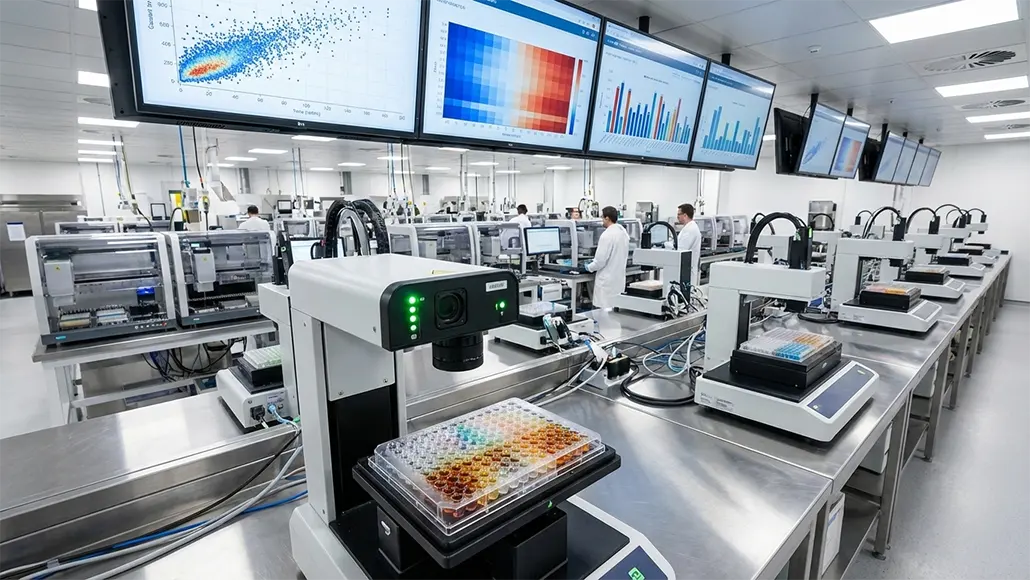
Digital tools in drug delivery development are also revolutionizing the way experimental data is collected and analyzed. The rise of high-throughput screening (HTS) allows laboratories to conduct thousands of miniature experiments simultaneously. However, the sheer volume of data generated by HTS is overwhelming for human researchers. This is where digital pharma tools and machine learning algorithms come in. These platforms can ingest millions of data points, identify hidden correlations, and suggest the next set of experiments to perform.
This “closed-loop” R&D environment where data from the lab is immediately used to refine the digital model is the ultimate realization of digital transformation pharma. It creates a continuous cycle of learning that accelerates the discovery of new delivery platforms. Furthermore, cloud-based data management systems are enabling global collaboration, allowing a team in Basel to analyze data from a high-throughput lab in San Francisco in real-time. This breaking down of silos is essential for tackling complex global health challenges and for bringing new therapies to market at a speed that matches the urgency of patient needs.
Regulatory Acceptance and the Move Toward Virtual Trials
One of the final hurdles for digital tools in drug delivery development is the acceptance of their results by regulatory bodies like the FDA and EMA. Historically, these agencies have required physical data from animal and human trials for every decision. However, this is beginning to change. Recognizing the power and accuracy of modern formulation modeling software, regulators are increasingly accepting “in silico” data as part of the evidence package for new drug applications. In some cases, digital simulations can now be used to replace certain animal studies, a move that is both scientifically and ethically significant.
The ultimate goal is the move toward “Virtual Clinical Trials.” While we may never be able to replace human trials entirely, digital tools can be used to optimize trial design, identifying the exact patient population most likely to benefit from a treatment. This ensures that clinical trials are smaller, faster, and more likely to succeed. By integrating digital transformation pharma into the regulatory process, we are creating a more agile and responsive healthcare system that can react to new diseases and evolving patient needs with unprecedented speed.
Future Horizons: AI-Driven Autonomous Laboratories
Looking to the future, the field of drug delivery R&D is moving toward the creation of fully autonomous, AI-driven laboratories. In these facilities, digital tools will not only model and predict but will also control robotic systems that perform the actual chemistry. The AI will design a formulation, a robot will manufacture it, a second robot will test its performance, and the digital twin will be updated with the results all without human intervention. This would represent the pinnacle of digital tools in drug delivery development, turning pharmaceutical science into a high-speed, self-correcting engine of discovery.
The impact of this shift on global health would be profound. By lowering the cost and time required to develop a new delivery system, we can make advanced therapeutics accessible to a much broader population. We can rapidly develop customized treatments for rare diseases that were previously too expensive to research. The ongoing digital transformation of the pharmaceutical industry is about more than just efficiency; it is about democratizing innovation and ensuring that the most advanced medical tools are available to everyone who needs them. The future of medicine is digital, and the journey has only just begun.