












The global pharmaceutical industry is at a crossroads, balancing the urgent need for advanced therapeutic innovations with the growing demand for environmental responsibility. Historically, the focus of drug development has been almost exclusively on efficacy and safety, with little regard for the environmental legacy of the materials used in production and delivery. However, the rise of “green pharmacy” is changing this narrative. Today, the integration of sustainable drug delivery materials is becoming a strategic priority for biopharma companies worldwide. This shift is driven by a combination of regulatory pressure, consumer demand, and a genuine corporate recognition that the long-term health of the planet is inextricably linked to the health of the human population.
Pharmaceutical sustainability is a complex challenge, as the materials used in drug delivery must meet incredibly high standards for purity, stability, and biocompatibility. They cannot simply be “green”; they must also be technically superior. This has led to a surge in research into sustainable pharma materials that can replace traditional, non-biodegradable plastics and synthetic polymers. From the enteric coatings on tablets to the complex nanocarriers used in oncology, every component of a drug delivery system is being re-evaluated through the lens of environmental impact. The goal is to create a healthcare system that heals the patient without harming the earth.
The Evolution of Biodegradable Polymers
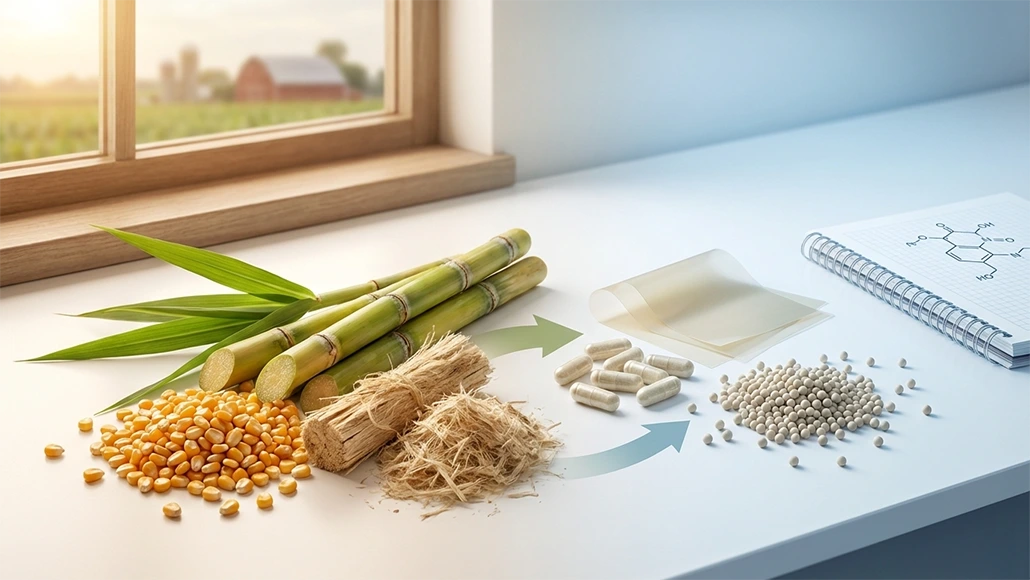
A cornerstone of the movement toward eco-friendly drug delivery is the development of biodegradable polymers. Traditional drug delivery systems often rely on synthetic plastics like polyethylene and PVC, which can persist in the environment for centuries. In contrast, sustainable drug delivery materials such as polylactic acid (PLA) and polyglycolic acid (PGA) are derived from renewable resources like corn starch and sugarcane. These materials are designed to break down into harmless natural products once they have performed their function in the body or been disposed of in a landfill.
Beyond simple biodegradability, these “green” polymers offer unique functional advantages. For instance, researchers are using plant-derived cellulose and chitin to create advanced hydrogels and microparticles. These natural polymers are inherently biocompatible, reducing the risk of immune reactions in the patient. Furthermore, by using green formulation strategies, scientists can tune the degradation rate of these materials to provide a precise, controlled release of the medication. This synergy between nature and engineering is proving that sustainability and high performance are not mutually exclusive but are instead the two pillars of the next generation of pharmaceutical science.
Green Formulation Strategies and Eco-Friendly Excipients
The push for pharmaceutical sustainability extends beyond the active drug and the primary delivery device to include the vast array of “inactive” ingredients known as excipients. Traditional excipients are often derived from petroleum-based sources, but the industry is now turning toward sustainable pharma materials sourced from the forest and the farm. Cellulose ethers, for example, are widely used as binders and thickeners and can be sustainably harvested from wood pulp. Similarly, plant-based lipids and waxes are replacing synthetic versions in the development of creams and ointments.
Green formulation strategies also involve the reduction of solvents and the use of “water-based” manufacturing processes. Many traditional pharmaceutical processes require large amounts of organic solvents, which are often toxic and difficult to dispose of. By moving toward aqueous-based coating systems and solvent-free granulation techniques, manufacturers can significantly reduce their environmental footprint. This “benign by design” approach ensures that the manufacturing process is as sustainable as the product itself. Furthermore, the use of eco-friendly drug delivery systems often results in more efficient absorption, meaning less of the active drug is wasted and eventually excreted into the water supply a major concern for global environmental health.
Lifecycle Assessment and the Reduction of Medical Waste
One of the most important tools in the drive for pharmaceutical sustainability is the Lifecycle Assessment (LCA). This scientific approach evaluates the environmental impact of a product from “cradle to grave” from the extraction of raw materials to the disposal of the packaging. LCA is helping biopharma companies identify the “hotspots” in their supply chain where sustainable drug delivery materials can have the greatest impact. For example, an LCA might reveal that the single-use plastic injectors used for biologics are a major source of waste, leading to the development of reusable “smart” injectors that only require a small, biodegradable drug cartridge to be replaced.
The reduction of medical waste is a critical goal of these efforts. Millions of plastic inhalers, syringes, and blister packs are discarded every day, contributing to the global plastic crisis. Sustainable pharma materials, such as bio-based plastics for inhaler bodies and recyclable foil for blister packs, are beginning to make a dent in this problem. However, the ultimate goal is the creation of “closed-loop” systems where medical devices can be safely collected and reprocessed. Achieving this will require a new level of collaboration between manufacturers, healthcare providers, and patients, all working together to ensure that the tools of modern medicine do not become the pollutants of tomorrow.
Regulatory Hurdles and the Path to Market
Despite the clear benefits, the transition to sustainable drug delivery materials faces significant regulatory hurdles. Agencies like the FDA require extensive data to prove that a new, eco-friendly material is just as safe and stable as the material it is replacing. This can lead to long and expensive testing cycles, as manufacturers must demonstrate that the bio-based polymer does not interact with the drug or leach harmful chemicals over time. To overcome this, many companies are focusing on “drop-in” replacements sustainable materials that have a similar chemical structure to traditional ones but are derived from renewable sources.
The cost of sustainable pharma materials is also a factor. Currently, bio-based polymers can be more expensive than their petroleum-based counterparts. However, as production scales up and carbon taxes become more common, the economic gap is narrowing. Furthermore, many forward-thinking companies are viewing pharmaceutical sustainability as an investment in their brand reputation and long-term resilience. By leading the way in green formulation strategies, these companies are positioning themselves as the partners of choice for a new generation of environmentally conscious healthcare systems and patients.
Future Horizons: Toward a Truly Green Pharmacy
Looking ahead, the future of sustainable drug delivery materials lies in the development of truly “intelligent” and bio-integrated systems. Imagine a delivery patch made of a silk-derived protein that completely dissolves into the skin after it has delivered its dose, leaving zero waste behind. Or a “smart” pill bottle made from mushroom-based packaging that is fully compostable in a backyard garden. These are not just theoretical concepts; early prototypes are already being tested in laboratories around the world.
The convergence of biotechnology and material science is set to create a future where medicine and nature exist in harmony. By embracing eco-friendly drug delivery, the pharmaceutical industry is proving that it can be a force for good not only in the clinic but also in the global environment. The ongoing evolution of sustainable drug delivery materials is a testament to the power of innovation to solve the most pressing challenges of our time. As we continue to refine our ability to heal the human body, we must remain equally committed to protecting the biological systems that sustain us all. The move toward green pharmacy is not just a trend; it is the essential future of modern healthcare.