








Close
Smartlab Europe
Inizio Ignite

Moderna Provides COVID-19 Vaccine Supply Update

Note* - All images used are for editorial and illustrative purposes only and may not originate from the original news provider or associated company.

Subscribe

- Never miss a story with notifications

- Gain full access to our premium content

- Browse free from any location or device.

Media Packs

Expand Your Reach With Our Customized Solutions Empowering Your Campaigns To Maximize Your Reach & Drive Real Results!

– Access the Media Pack Now

– Book a Conference Call

Leave Message for Us to Get Back

Related stories

Predictive Analytics in Labs: Driving Smarter Decisions in Pharma

The application of statistical algorithms and machine learning techniques to historical research data is enabling scientists to anticipate experimental outcomes and identify emerging patterns with unprecedented accuracy. By moving from a retrospective view of data to a forward-looking perspective, research facilities can optimize their strategies and focus their resources on the most promising therapeutic avenues.

IoT Applications Enhancing Laboratory Operational Efficiency

The integration of internet-connected sensors and smart devices is fundamentally reshaping how research facilities monitor their environment and manage their instrumentation. By providing a constant stream of real-time data, these technological advancements allow for a more granular level of control over laboratory operations, ensuring that the delicate conditions required for high-stakes pharmaceutical research are maintained with absolute precision.

Optimizing Pharma Workflows with Integrated Lab Software Solutions

The modern laboratory environment requires a unified approach to data management and process control to remain competitive. By bridging the gap between disparate instruments and legacy databases, research facilities can eliminate operational silos and create a high-speed environment where innovation is no longer hindered by fragmented digital infrastructure.
- Advertisement -

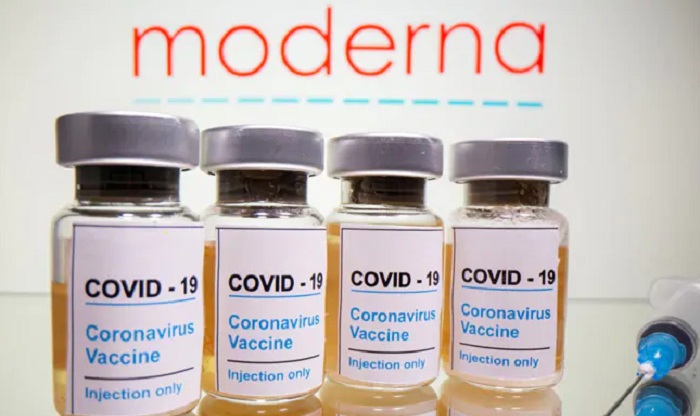
Moderna, Inc., a biotechnology company pioneering messenger RNA (mRNA) therapeutics and vaccines, provided a supply update for the Moderna COVID-19 Vaccine, increasing its base-case global production estimate from 500 to 600 million doses for 2021. Moderna said it is continuing to invest and add staff to build up to potentially 1 billion doses for 2021.

The Company said it expects about 100 million doses to be available in the United States by the end of the first quarter of 2021, with 200 million doses total available by the end of the second quarter. Moderna reported that approximately 18 million doses have been supplied to the U.S. Government to date. The vaccine received Emergency Use Authorization from the U.S. Food and Drug Administration (FDA) on December 18, 2020 and Moderna began supplying to the government shortly thereafter. Additional vaccine doses have also been supplied to the Canadian government following authorization by Health Canada’s Interim Order on December 23, 2020.

“Our effectiveness in providing early supply to the U.S. and Canadian governments and our ability to increase baseline production estimates for 2021 are both signals that our scale up of mRNA vaccine production is a success,” said Juan Andres, Chief Technical Operations and Quality Officer at Moderna. “I want to thank the many private and government collaborators, contractors and the hundreds of Moderna staff who have been working thoughtfully and tirelessly to accomplish this.”

Moderna is partnered with Lonza Ltd. for production inside and outside the United States. Fill-finish services are provided by Catalent Inc. in the U.S., and by ROVI and Recipharm outside the U.S. The U.S. Government has agreed to purchase 200 million doses of the Moderna COVID-19 Vaccine with options for potential purchase of 300 million additional doses. The Canadian Government has agreed to purchase 40 million doses.

About the Moderna COVID-19 Vaccine

The Moderna COVID-19 Vaccine is an mRNA vaccine against COVID-19 encoding for a prefusion stabilized form of the Spike (S) protein, which was co-developed by Moderna and investigators from National Institute of Allergy and Infectious Diseases’ (NIAID) Vaccine Research Center. The first clinical batch, which was funded by the Coalition for Epidemic Preparedness Innovations, was completed on February 7, 2020 and underwent analytical testing; it was shipped to the National Institutes of Health (NIH) on February 24, 42 days from sequence selection. The first participant in the NIAID-led Phase 1 study of the Moderna COVID-19 Vaccine was dosed on March 16, 63 days from sequence selection to Phase 1 study dosing. On May 12, the FDA granted the Moderna COVID-19 Vaccine Fast Track designation. On May 29, the first participants in each age cohort: adults ages 18-55 years (n=300) and older adults ages 55 years and above (n=300) were dosed in the Phase 2 study of mRNA-1273. On July 8, the Phase 2 study completed enrollment.
 

Latest stories

Related stories

Predictive Analytics in Labs: Driving Smarter Decisions in Pharma

The application of statistical algorithms and machine learning techniques to historical research data is enabling scientists to anticipate experimental outcomes and identify emerging patterns with unprecedented accuracy. By moving from a retrospective view of data to a forward-looking perspective, research facilities can optimize their strategies and focus their resources on the most promising therapeutic avenues.

IoT Applications Enhancing Laboratory Operational Efficiency

The integration of internet-connected sensors and smart devices is fundamentally reshaping how research facilities monitor their environment and manage their instrumentation. By providing a constant stream of real-time data, these technological advancements allow for a more granular level of control over laboratory operations, ensuring that the delicate conditions required for high-stakes pharmaceutical research are maintained with absolute precision.

Optimizing Pharma Workflows with Integrated Lab Software Solutions

The modern laboratory environment requires a unified approach to data management and process control to remain competitive. By bridging the gap between disparate instruments and legacy databases, research facilities can eliminate operational silos and create a high-speed environment where innovation is no longer hindered by fragmented digital infrastructure.

Advanced Robotics Driving Pharmaceutical Lab Efficiency

The implementation of high-speed robotic systems and automated handling technologies is fundamentally altering the productivity of modern research facilities. By taking over repetitive physical tasks and operating with sub-millimeter precision, these mechanical innovators are allowing scientific staff to redirect their cognitive energy toward complex analysis and the development of breakthrough therapies.

Subscribe

- Never miss a story with notifications

- Gain full access to our premium content

- Browse free from any location or device.

Media Packs

Expand Your Reach With Our Customized Solutions Empowering Your Campaigns To Maximize Your Reach & Drive Real Results!

– Access theMedia Pack Now

– Book a Conference Call

Leave Message for Us to Get Back

Translate »