







In the highly competitive and capital-intensive landscape of modern drug development, the traditional model of the fully integrated pharmaceutical company (FIPCO)—where every function from discovery to commercialization is housed under one roof—is increasingly giving way to networked ecosystem models. Central to this paradigm shift is the reliance on Contract Development and Manufacturing Organizations (CDMOs). While manufacturing outsourcing has been a staple of the industry for decades, the trend of outsourcing complex laboratory functions—and effectively the high-value equipment that powers them—is gaining significant momentum. Strategic CDMO laboratory outsourcing has emerged as a critical lever for companies aiming to optimize their balance sheets, accelerate timelines, and maintain access to world-class scientific infrastructure without the burden of ownership.
The Financial Paradigm: Shifting from CapEx to OpEx
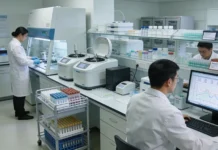
The most immediate and compelling driver for laboratory outsourcing is the optimization of capital allocation. Establishing a modern pharmaceutical laboratory requires massive upfront investment. High-resolution mass spectrometers (HRMS), nuclear magnetic resonance (NMR) machines, and automated bioreactor systems represent millions of dollars in Capital Expenditure (CapEx). Beyond the sticker price, the “total cost of ownership” includes facility costs for specialized HVAC, nitrogen supply lines, high-containment suites (for potent compounds), and ongoing service contracts which can cost 10-15% of the asset’s value annually.
Asset Utilization and Flexibility
For small to mid-sized biotech firms, purchasing such equipment can drain the runway needed to reach the next clinical milestone. By leveraging a CDMO’s infrastructure, these fixed costs are converted into variable Operational Expenses (OpEx). This model provides unparalleled agility; a company can scale analytical testing up or down based on the immediate needs of the pipeline without being tethered to depreciating assets. For large pharma, this strategy is equally vital for capacity management, allowing them to handle peak workloads—such as during Phase III stability testing—without over-investing in internal capacity that might sit idle during troughs in the R&D cycle. This financial flexibility is often the difference between surviving a “crypto winter” in biotech funding and folding before a molecule reaches the clinic.
Access to Specialized Technology and Niche Expertise
The speed of innovation in laboratory instrumentation is relentless. Equipment that is state-of-the-art today may be obsolete in five years. CDMOs, whose core value proposition is technical excellence, are compelled to maintain the cutting edge of technology to attract and retain clients. They amortize the cost of these expensive tools across multiple clients, making the economics work where they wouldn’t for a single product company.
The Rise of “Big Iron” Outsourcing
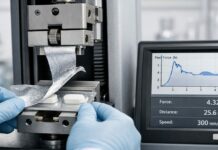
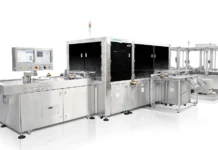
Through strategic CDMO laboratory outsourcing, sponsors gain access to niche and high-end technologies that would be difficult to justify purchasing for a single program. A prime example is Cryo-Electron Microscopy (Cryo-EM), a revolutionary technique for structural biology. A Cryo-EM facility can cost upwards of $5-7 million to establish. For a biotech needing to solve the structure of a single difficult protein, building this in-house is financial suicide. Partnering with a specialized CDMO allows them to obtain this critical data for a fraction of the cost. Similarly, access to high-throughput screening (HTS) platforms or next-generation sequencing (NGS) capabilities allows smaller players to punch above their weight class, generating data packages that rival those of top-tier pharma companies.
Furthermore, the equipment comes bundled with the “human capital”—expert operators who possess the tacit knowledge to troubleshoot complex assays and interpret nuanced data. Operating a high-field NMR or developing a robust method on a UPLC requires years of specialized training. In a talent-constrained market, outsourcing provides immediate access to these experts, a resource often scarcer than the hardware itself.
Evolving Partnership Models: FFS vs. FTE
The nature of the contract dictates the level of control and flexibility the sponsor has over the outsourced equipment and personnel. Understanding the distinction between Fee-For-Service (FFS) and Full-Time Equivalent (FTE) models is crucial for strategic CDMO laboratory outsourcing.
The Transactional FFS Model
In a Fee-For-Service model, the sponsor pays for a specific deliverable—e.g., “test 100 samples for purity.” This is ideal for routine, standardized testing where the method is robust and the scope is well-defined. The CDMO manages the equipment schedule, and the sponsor pays a fixed price per unit. However, this model lacks flexibility; if a problem arises or the scope changes, a new work order (and negotiation) is required, which can cause delays.
The Collaborative FTE Model
For complex R&D activities, the FTE model is becoming the preferred standard. Here, the sponsor pays for a dedicated team of scientists at the CDMO who work exclusively on their projects. Effectively, the sponsor is “renting” the scientists and the equipment they use. This allows for dynamic reprioritization; if an experiment yields unexpected results on Tuesday, the team can pivot to a new strategy on Wednesday without renegotiating the contract. This model fosters a deeper collaborative relationship, where the CDMO scientists function as an extension of the sponsor’s internal team, often participating in weekly project meetings and contributing to experimental design.
Strategic Risks and Quality Considerations
While the benefits are compelling, outsourcing laboratory functions introduces distinct risks that must be managed through due diligence and robust contractual frameworks. The physical separation of the scientist from the experiment requires a shift in how quality and progress are monitored.
Data Integrity and Connectivity
In a fragmented supply chain, data integrity is paramount. The sponsor must ensure that the CDMO’s laboratory equipment is integrated into a secure data environment that adheres to ALCOA+ principles (Attributable, Legible, Contemporaneous, Original, and Accurate). Modern outsourcing partnerships often involve integrating the CDMO’s Laboratory Information Management System (LIMS) with the sponsor’s platforms to provide real-time visibility into testing results. This connectivity bridges the geographical gap, treating the external lab as a virtual extension of the internal R&D function. “Black box” outsourcing, where data disappears and a report returns weeks later, is no longer acceptable. Sponsors demand raw data access and audit trails to verify that the CDMO’s equipment was calibrated and operated correctly.
Tech Transfer and Standardization
The transfer of analytical methods from a sponsor to a CDMO (or vice versa) is a critical juncture where equipment differences can cause failure. A method validated on a specific brand of HPLC in-house may not reproduce perfectly on a different system at the partner site due to differences in dwell volume or detector sensitivity. Strategic outsourcing requires careful alignment of equipment specifications or robust bridging studies to demonstrate equivalency. Smart procurement strategies often involve aligning equipment choices with preferred strategic partners—purchasing the same make and model of instruments—to facilitate seamless tech transfer and reduce the risk of “method non-transferability.”
The Future: “Condo Labs” and Hybrid Models
The relationship between pharma companies and CDMOs is evolving from transactional arrangements to deep strategic partnerships. We are seeing the rise of “condo labs” or dedicated suites within CDMO facilities. in this arrangement, the CDMO provides the shell (building, utilities, waste management) and the sponsor installs their own proprietary equipment and potentially their own staff. This hybrid model offers the best of both worlds: the infrastructure benefits of outsourcing with the IP protection and control of insourcing.
Conclusion
Strategic CDMO laboratory outsourcing is no longer just a cost-saving tactic; it is a capability multiplier. It allows pharmaceutical companies to navigate the complexities of modern drug development with greater speed and financial efficiency. By carefully selecting partners that offer not just capacity, but technological leadership and rigorous data compliance, sponsors can build a flexible, high-performance R&D engine. In an era where being second to market can mean failure, the ability to instantly tap into a global network of advanced laboratory infrastructure is a decisive competitive advantage.