








Close
Almac
Achema middle east

AI Algorithms Unveil Abaucin To Combat Resilient Pathogen

Note* - All images used are for editorial and illustrative purposes only and may not originate from the original news provider or associated company.

Subscribe

- Never miss a story with notifications

- Gain full access to our premium content

- Browse free from any location or device.

Media Packs

Expand Your Reach With Our Customized Solutions Empowering Your Campaigns To Maximize Your Reach & Drive Real Results!

– Access the Media Pack Now

– Book a Conference Call

Leave Message for Us to Get Back

Related stories

First GLP-1 Pill for Obesity by Novo Nordisk Approved by FDA

The U.S. Food and Drug Administration – FDA on...

How High-Achievers Stay Future-Ready in Evolving Job Markets

Job markets today are transforming rapidly. In the past...

Proactive Risk Management as a Core Capability in Pharma Development

Risk management in pharma is often treated as a reactive compliance box-ticking exercise. This article argues for reframing risk as a strategic competitive advantage. It details proactive frameworks like the "Excipient Exclusion Filter," Decision Quality (DQ) matrices, and "pre-mortem" analyses that allow development teams to anticipate failure modes and engineer them out of the pipeline before they occur.
- Advertisement -

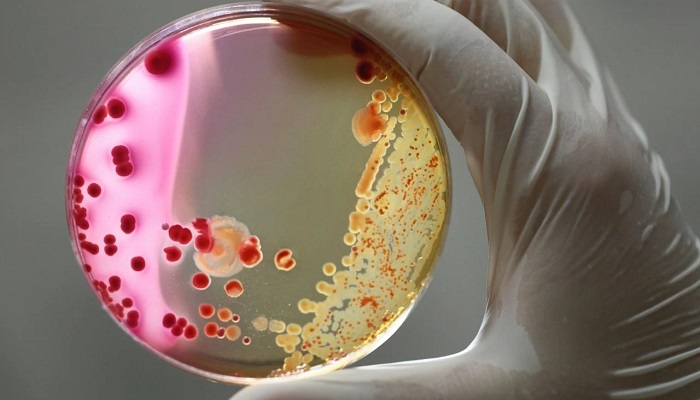
McMaster University and Massachusetts Institute of Technology scientists leverage artificial intelligence to uncover a novel antibiotic named abaucin. This breakthrough has the potential to combat a dangerous drug-resistant bacterium, Acinetobacter baumannii, which affects vulnerable hospital patients. A. baumannii is known for its resilience and ability to acquire antibiotic-resistant genes from other bacteria. Traditional methods of screening for antibiotics against A. baumannii have been challenging, time-consuming, and limited in scope. However, AI algorithms can rapidly explore vast chemical spaces, increasing the chances of finding novel antibacterial compounds.

Abaucin is a promising discovery as it specifically targets A. baumannii, reducing the risk of the pathogen developing drug resistance and potentially leading to more precise and effective treatments. Unlike broad-spectrum antibiotics that harm the gut microbiome and increase the likelihood of serious infections, abaucin’s targeted approach is favorable. This breakthrough validates the advantages of using machine learning in the search for new antibiotics. AI methods allow for the exploration of extensive chemical space, significantly enhancing the discovery of fundamentally new antibacterial molecules. This approach to drug discovery is expected to continue evolving and becoming more refined.

The urgent need for new drugs to treat A. baumannii arises from its classification as one of the world’s most dangerous antibiotic-resistant bacteria by the World Health Organization. A. baumannii is notoriously challenging to eradicate and can cause pneumonia, meningitis, and wound infections, which may lead to death. It is primarily found in hospital settings and can survive on surfaces for extended periods. The pathogen has the ability to acquire DNA from other bacterial species in its environment, including genes associated with antibiotic resistance.

The discovery of new antibiotics through conventional screening methods has been challenging due to their time-consuming, costly, and limited nature. However, modern algorithmic approaches, such as AI, can access hundreds of millions, if not billions, of molecules with antibacterial properties. AI-driven approaches offer a significant advantage in rapidly discovering new antibiotics, potentially leading to reduced costs. This avenue of exploration for new antibiotic drugs is essential in light of the suboptimal nature of broad-spectrum antibiotics and the ability of pathogens to evolve and adapt to various treatments.

Latest stories

Related stories

First GLP-1 Pill for Obesity by Novo Nordisk Approved by FDA

The U.S. Food and Drug Administration – FDA on...

How High-Achievers Stay Future-Ready in Evolving Job Markets

Job markets today are transforming rapidly. In the past...

Proactive Risk Management as a Core Capability in Pharma Development

Risk management in pharma is often treated as a reactive compliance box-ticking exercise. This article argues for reframing risk as a strategic competitive advantage. It details proactive frameworks like the "Excipient Exclusion Filter," Decision Quality (DQ) matrices, and "pre-mortem" analyses that allow development teams to anticipate failure modes and engineer them out of the pipeline before they occur.

How Advanced Analytics is Redefining Pharma Project Prioritization

The era of "gut feeling" in pharmaceutical portfolio management is ending. This article explores how advanced analytics, machine learning, and predictive modeling are revolutionizing project prioritization. It details the shift to Monte Carlo simulations, integrated data lakes, and AI-driven decision support, enabling companies to objectively rank programs and optimize R&D return on investment.

Subscribe

- Never miss a story with notifications

- Gain full access to our premium content

- Browse free from any location or device.

Media Packs

Expand Your Reach With Our Customized Solutions Empowering Your Campaigns To Maximize Your Reach & Drive Real Results!

– Access theMedia Pack Now

– Book a Conference Call

Leave Message for Us to Get Back

Translate »