












The pharmaceutical world experienced a watershed moment in 2018 with the discovery of N-nitrosodimethylamine (NDMA) in the sartan class of medications. This event triggered massive global recalls and exposed a fundamental vulnerability in the way chemical impurities were assessed and controlled. Since then, nitrosamine risk mitigation in global pharma manufacturing has evolved from an emergency response into a permanent and highly sophisticated pillar of good manufacturing practice. These compounds, identified as potent carcinogens and mutagens, represent a unique challenge because they can form through diverse and often subtle chemical pathways during synthesis, formulation, and even storage. Protecting the patient requires more than just testing; it demands a forensic approach to chemistry that scrutinizes every reagent, solvent, and excipient involved in the lifecycle of a drug.
The complexity of nitrosamine risk is compounded by the global nature of pharmaceutical production. Active pharmaceutical ingredients are often manufactured in multi-purpose facilities where the risk of cross-contamination is high, and the use of recycled materials is common. Furthermore, the discovery of nitrosamine drug substance-related impurities has introduced a new layer of complexity, as these impurities are structurally related to the drug molecule itself. Navigating this landscape requires a multidisciplinary effort that integrates synthetic chemistry, toxicology, and advanced analytical science. By adopting a proactive and transparent mitigation strategy, the industry can restore public confidence and ensure that the next generation of medicines is free from these insidious contaminants that threaten patient safety.
Chemical Mechanisms and the Architecture of Risk
At the molecular level, nitrosamines are formed through the reaction of a secondary or tertiary amine with a nitrosating agent, typically under acidic conditions. While this reaction is well-understood in organic chemistry, its occurrence in a pharmaceutical manufacturing environment can be triggered by a multitude of factors. Nitrosating agents such as nitrites, nitrous acid, or nitrosyl halides can be introduced as intentional reagents or as trace impurities in common materials like water and nitric acid. Amines may be present as part of the drug structure, as degradation products, or as remnants of solvents like dimethylformamide. The intersection of these precursors, often occurring across different stages of a multi-step synthesis, creates a high-probability environment for nitrosamine formation. Effective nitrosamine risk mitigation in global pharma manufacturing begins with a thorough paper-based risk assessment of the synthetic route. This involves identifying all potential sources of amines and nitrosating agents and evaluating whether the conditions allow for their reaction. It is not enough to look at the final step; the risk assessment must trace back to the very first starting materials. This forensic scrutiny allows manufacturers to identify high-risk processes where nitrosamines are most likely to form. By modifying the sequence of reagent addition or switching to alternative synthetic pathways that avoid susceptible precursors, companies can eliminate the risk at its source. This Quality by Design philosophy is the most robust way to ensure long-term compliance and patient safety. Furthermore, the industry is now looking at the potential for “atypical” nitrosation reactions that occur in non-aqueous environments, expanding the scope of risk assessment to include complex solvent systems and solid-state interactions within the dosage form.
Operational Risks in Multi-Purpose Facilities and Solvent Recovery
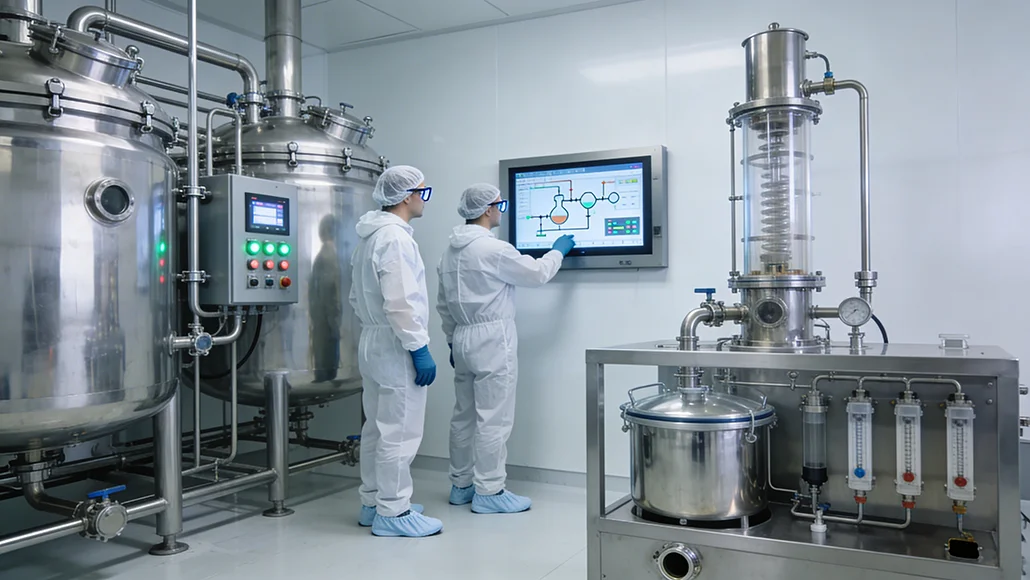
A significant portion of the nitrosamine risk in global manufacturing stems from operational practices rather than the chemistry of the drug itself. Many drug substances are produced in multi-purpose plants that handle a wide variety of chemical processes. If the cleaning validation protocols are not sufficiently rigorous, trace amounts of amines from one process can react with nitrosating agents from another, leading to cross-contamination. Furthermore, the use of recycled solvents, a practice driven by the need for sustainability and cost-efficiency, has been identified as a major risk factor. If a solvent recovery process is not validated to remove nitrosamine precursors or the impurities themselves, these contaminants can be cycled back into subsequent batches, leading to persistent and difficult-to-trace contamination issues.
Managing these operational risks requires a heightened level of transparency between pharmaceutical companies and their contract manufacturing organizations. Manufacturers must demand detailed information regarding the equipment history, cleaning procedures, and solvent management practices at every site. Audits should specifically target the blind spots where nitrosamines can hide, such as the logistics of solvent collection and the validation of third-party recovery services. By implementing strict controls over the material lifecycle and ensuring that dedicated equipment is used for high-risk processes, the industry can mitigate the operational hazards that have historically led to large-scale recalls. This level of oversight is a vital component of nitrosamine risk mitigation in global pharma manufacturing in an increasingly interconnected production environment. The move toward “closed-loop” manufacturing systems and the adoption of single-use technologies in certain stages of production are also being explored as ways to further reduce the risk of adventitious contamination.
The Role of Excipients and In-Situ Formation During Storage
While the focus was initially on the active ingredient manufacturing process, it has become clear that the final drug product formulation is also a critical risk area. Many common excipients, such as microcrystalline cellulose and starch, can contain trace amounts of nitrates and nitrites as residues from their own agricultural or chemical processing. Over the shelf life of the drug, these nitrites can react with amines present in the drug molecule or its degradation products to form nitrosamines in situ. This form of contamination is particularly challenging because it may not be present at the time of release but develops over months of storage under varying environmental conditions. To address this, manufacturers are now integrating excipient risk assessments into their formulation development. This involves testing excipients for nitrite levels and selecting suppliers that can provide high-purity materials with consistent, low-nitrite profiles.
In some cases, formulation scientists are adding nitrosamine inhibitors, such as antioxidants like ascorbic acid, to the drug product. These scavengers react with nitrosating agents more quickly than the drug does, effectively blocking the formation of the harmful impurity. This proactive approach to formulation is a testament to the evolving sophistication of nitrosamine risk mitigation in global pharma manufacturing. By understanding the chemical micro-environment within a tablet or capsule, scientists can design more stable products that remain safe for the patient throughout their entire shelf life. This requires a shift from simple stability testing to mechanistic studies that explore the kinetics of impurity formation under stressed conditions, providing the data needed to justify safe storage and distribution limits.
Analytical Precision and the Challenge of Trace Detection
The regulatory limits for nitrosamines are among the lowest for any pharmaceutical impurity, often set in the parts-per-billion range. Detecting and quantifying these substances requires the most advanced analytical instrumentation available, specifically High-Performance Liquid Chromatography coupled with Tandem Mass Spectrometry. These systems provide the necessary sensitivity and selectivity to distinguish nitrosamines from the complex matrix of the drug substance. However, the development of these methods is a resource-intensive process that requires rigorous validation to ensure they are robust and reproducible across different laboratories.
One of the significant challenges in nitrosamine testing is the matrix effect, where the active ingredient or excipients interfere with the detection of the impurity. For many complex drug substances, specialized sample preparation techniques, such as solid-phase extraction, are required to concentrate the nitrosamine and remove interfering components. Furthermore, the volatility of some nitrosamines means that they can be lost during sample preparation if not handled correctly. Maintaining a high level of analytical excellence is a non-negotiable part of nitrosamine risk mitigation in global pharma manufacturing. Companies must invest in state-of-the-art equipment and highly trained personnel to ensure that their testing results are accurate and can withstand the scrutiny of health authorities. The industry is also moving toward the use of “high-resolution” mass spectrometry, which provides exact mass measurements and helps in the unequivocal identification of unknown nitrosamine-like signals, further strengthening the safety net for patients.
Conclusion
The journey of nitrosamine risk management has been one of discovery and rapid adaptation. It has forced the industry to look closer at the blind spots in chemical manufacturing and to adopt a more holistic view of product safety. By combining rigorous analytical science with proactive process design and transparent regulatory collaboration, the pharmaceutical sector is successfully mitigating one of the most complex impurity challenges of the modern era. The ultimate goal remains the same: ensuring that every medication produced is not only effective but also free from avoidable risks, maintaining the public’s trust in the global healthcare system.
Strengthened nitrosamine risk mitigation in global pharma manufacturing is not just a regulatory requirement; it is a moral imperative that reflects the industry’s commitment to “First, Do No Harm.” Through meticulous oversight and scientific excellence, the industry is setting a new standard for quality that will protect patients for generations to come. As we move forward, the lessons learned from nitrosamines will serve as a template for how to address other emerging impurity classes, fostering a culture of perpetual vigilance and scientific curiosity. By staying ahead of the curve and embracing a mindset of continuous improvement, pharmaceutical manufacturers can ensure that the healing promise of their products is never compromised by the presence of hidden, harmful contaminants.