









For much of the history of modern medicine, the “active pharmaceutical ingredient” (API) was the undisputed star of the show. The other ingredients in a pill or injection the excipients were often dismissed as “inert” substances used simply to bulk out a tablet or stabilize a liquid. However, the increasing complexity of modern therapeutics has forced a radical reimagining of these components. Today, excipients innovation in drug delivery is one of the most dynamic areas of pharmaceutical research. We have moved into an era where the excipient is an active partner in the drug’s success, designed with specific functionalities that enable targeted delivery, enhanced stability, and optimized therapeutic performance.
Pharmaceutical excipients now represent a multi-billion dollar industry that sits at the intersection of polymer science, chemistry, and biology. As the global research pipeline becomes increasingly dominated by large biologic molecules and poorly water-soluble small molecules, the limitations of “traditional” excipients have become apparent. Formulators are now looking for drug delivery excipients that can do more protecting delicate proteins from aggregation, navigating the harsh environment of the digestive tract, and even signaling to cells to allow a drug to enter. This focus on excipient functionality is the key to unlocking the potential of the next generation of medicines.
From Inert Fillers to Functional Powerhouses
The transition from inert fillers to functional excipients has been driven by the need for greater precision in drug release. Traditional lactose or starch fillers were sufficient for simple, fast-dissolving tablets, but modern chronic disease management often requires sustained or stimulus-triggered release. Excipients innovation in drug delivery has led to the development of “intelligent” polymers that can respond to the body’s internal environment. For example, pH-responsive polymers are used to ensure that a drug bypasses the acidic stomach and is only released when it reaches the more neutral environment of the small intestine. This level of control is essential for preventing stomach irritation and for maximizing the absorption of sensitive molecules.
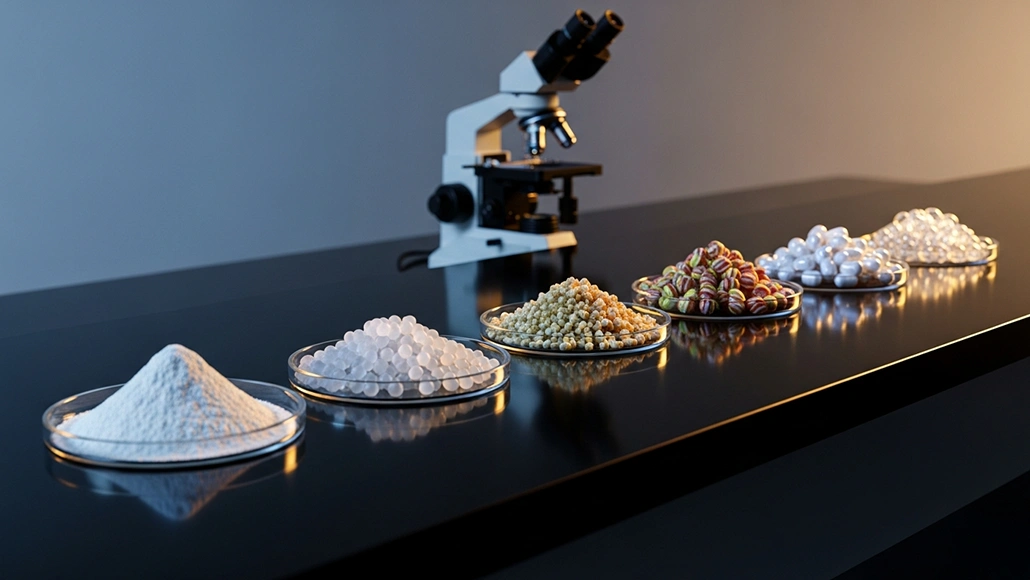
Furthermore, the rise of “co-processed” excipients represents a major leap in formulation performance. Instead of simply mixing several different powders, manufacturers are now engineering composite particles where multiple excipients are physically combined at the molecular level. These co-processed materials offer superior flow properties, better compressibility for tablet making, and more consistent drug loading. By simplifying the manufacturing process and reducing the variability between batches, these innovations ensure that the “quality by design” of the formulation is maintained from the laboratory to the pharmacy shelf.
Overcoming Solubility and Stability Challenges
Perhaps the most critical role of modern pharmaceutical excipients is in the management of poorly soluble drugs. It is estimated that a majority of new drugs in development struggle to dissolve in the body’s watery fluids. Excipients innovation in drug delivery has provided the solution through the use of “solubilizing” agents and solid dispersions. Specialized polymers like hypromellose acetate succinate (HPMCAS) can be used to create amorphous solid dispersions, where the drug molecule is trapped in a non-crystalline state that dissolves much more easily. This technology has successfully “rescued” many potent molecules that would otherwise have been clinically useless.
In the realm of biologics, the focus shifts to formulation stability. Proteins and peptides are highly sensitive and can easily lose their function if they unfold or clump together. Modern drug delivery excipients now include a variety of stabilizers, such as non-ionic surfactants and specific amino acids, that create a protective “shield” around the protein. These innovators are also working on “cryoprotectant” excipients that allow biologics to be freeze-dried and stored at room temperature, potentially eliminating the need for expensive and fragile cold-chain logistics. By ensuring that the drug remains active and safe throughout its entire shelf life, these functional excipients are the unsung heroes of the biopharmaceutical revolution.
Enhancing Bioavailability through Permeability Control
Beyond simple solubility, the next frontier for pharmaceutical excipients is the manipulation of biological membranes. Many complex drug molecules are blocked by the intestinal lining or the blood-brain barrier. Excipients innovation in drug delivery is now producing “permeability enhancers” that can safely and temporarily open the tight junctions between cells. This allows for the oral delivery of large molecules, such as insulin or certain peptides, which previously could only be administered via injection.
This level of excipient functionality requires a deep understanding of toxicology and cell biology. The challenge is to ensure that the “opening” is reversible and does not allow harmful bacteria or toxins to enter the bloodstream along with the drug. New classes of “mucoadhesive” polymers are also being developed to slow down the transit of the drug through the gut, keeping it in contact with the absorption surface for a longer period. By combining these advanced drug delivery excipients, formulators can significantly boost the bioavailability of challenging compounds, turning “difficult” molecules into highly effective treatments.
Regulatory Evolution and the “Novel” Excipient Challenge
Despite the clear benefits of excipients innovation in drug delivery, the path to clinical use is often blocked by regulatory hurdles. Historically, regulatory agencies like the FDA have been hesitant to approve “novel” excipients those that have not been used in a previously approved drug product. This creates a “catch-22” where manufacturers are reluctant to use innovative excipients because it increases the risk of their drug being rejected. However, this is beginning to change. Recognizing the need for better delivery tools, the FDA has launched pilot programs to evaluate the safety of novel excipients independently of a specific drug application.
This regulatory evolution is essential for fostering a more innovative pharmaceutical environment. It allows excipient manufacturers to develop and test new materials, providing formulators with a broader “palette” of functional tools. As the database of safe, high-performance pharmaceutical excipients grows, the industry will be better equipped to tackle the challenges of personalized medicine and advanced therapeutics. The ongoing dialogue between industry and regulators is a vital component of the progress in formulation performance, ensuring that innovation is always balanced with patient safety.
Future Perspectives: Toward Molecularly Engineered Systems
Looking to the future, the field of excipients innovation in drug delivery is moving toward even more precise, molecularly engineered systems. We are entering the age of “designer excipients,” where the material is built atom-by-atom to interact with a specific drug molecule. Research is currently underway on dendrimers and star polymers that can encapsulate a drug and then “navigate” toward a specific cell type based on the surface markers it encounters. This level of sophistication effectively turns the excipient into a biological guidance system.
Furthermore, the integration of excipients with digital health tools is on the horizon. Imagine a “smart” excipient that can track its own degradation rate and signal to a wearable device when the drug has been fully released. While this may sound like science fiction, the steady pace of innovation in drug delivery excipients suggests that these capabilities are not far off. The transformation of excipients from “inert fillers” to “active enablers” is one of the most profound shifts in modern pharmacology. By continuing to push the boundaries of excipient functionality, we are building a more resilient, effective, and patient-centric healthcare system. The future of medicine is not just in the drugs we discover, but in the sophisticated materials we use to deliver them.