













Close
Almac
Achema middle east

Innovations And Digitalization In The AAV Manufacturing

Note* - All images used are for editorial and illustrative purposes only and may not originate from the original news provider or associated company.

Subscribe

- Never miss a story with notifications

- Gain full access to our premium content

- Browse free from any location or device.

Media Packs

Expand Your Reach With Our Customized Solutions Empowering Your Campaigns To Maximize Your Reach & Drive Real Results!

– Access the Media Pack Now

– Book a Conference Call

Leave Message for Us to Get Back

Related stories

First GLP-1 Pill for Obesity by Novo Nordisk Approved by FDA

The U.S. Food and Drug Administration – FDA on...

How High-Achievers Stay Future-Ready in Evolving Job Markets

Job markets today are transforming rapidly. In the past...

Proactive Risk Management as a Core Capability in Pharma Development

Risk management in pharma is often treated as a reactive compliance box-ticking exercise. This article argues for reframing risk as a strategic competitive advantage. It details proactive frameworks like the "Excipient Exclusion Filter," Decision Quality (DQ) matrices, and "pre-mortem" analyses that allow development teams to anticipate failure modes and engineer them out of the pipeline before they occur.
- Advertisement -

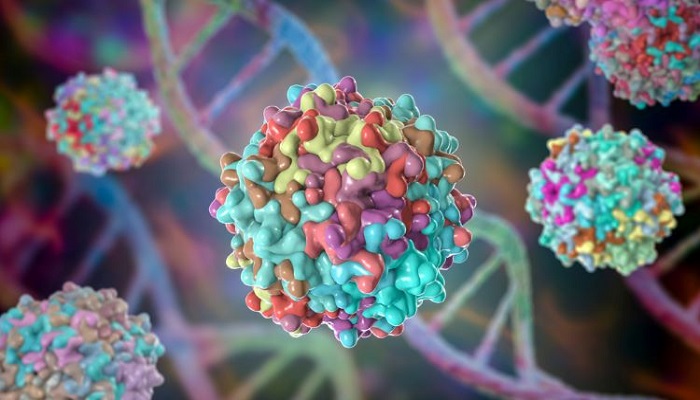
The Cell and Gene Therapy Catapult is embarking on a two-year project in collaboration with two other organizations, namely contract development and manufacturing organization (CDMO) Rentschler Biopharma and Refeyn Ltd. Their objective is to enhance the manufacturing process of adeno-associated viruses (AAV) used in gene therapies by incorporating automated and digital process analytical technologies (PAT).

More than 65 percent of gene therapies in development currently rely on AAV. Still, their production is intricate and time-consuming, primarily due to the conventional manual sampling methods employed for analytical purposes.

What does the PAT project entail?

The new PAT project aims to create an automated platform for gene therapy manufacturing. This system will be integrated into Rentschler Biopharma’s existing AAV manufacturing process.

It involves the automation of high-throughput sampling and analysis of AAV materials. The data generated will be utilized to construct digital replicas, allowing initial testing of process modifications in a virtual environment. A significant advantage of this approach is the potential reduction in physical laboratory tests required.

The collaborators will evaluate any enhancements in productivity and AAV yield resulting from adopting automated analytical technologies.

The Chief Executive of the Cell and Gene Therapy Catapult Matthew Durdy expressed, “We anticipate that this collaboration will substantially contribute to advancing the industry’s manufacturing capabilities.”

Potential outcomes for gene therapy manufacturing

The potential for expedited development of viral vectors, driven by multi-parameter optimization, promises increased output, enhanced robustness, and improved process control. Ultimately, this could mitigate the risks associated with transitioning from early-stage to late-stage manufacturing, as highlighted by Dr. Christian Schetter, Chief Scientific Officer of Rentschler Biopharma.

The PAT project is financially supported through a grant from Innovate UK, specifically designated for digitalizing and automating medicines research and manufacturing.


Latest stories

Related stories

First GLP-1 Pill for Obesity by Novo Nordisk Approved by FDA

The U.S. Food and Drug Administration – FDA on...

How High-Achievers Stay Future-Ready in Evolving Job Markets

Job markets today are transforming rapidly. In the past...

Proactive Risk Management as a Core Capability in Pharma Development

Risk management in pharma is often treated as a reactive compliance box-ticking exercise. This article argues for reframing risk as a strategic competitive advantage. It details proactive frameworks like the "Excipient Exclusion Filter," Decision Quality (DQ) matrices, and "pre-mortem" analyses that allow development teams to anticipate failure modes and engineer them out of the pipeline before they occur.

How Advanced Analytics is Redefining Pharma Project Prioritization

The era of "gut feeling" in pharmaceutical portfolio management is ending. This article explores how advanced analytics, machine learning, and predictive modeling are revolutionizing project prioritization. It details the shift to Monte Carlo simulations, integrated data lakes, and AI-driven decision support, enabling companies to objectively rank programs and optimize R&D return on investment.

Subscribe

- Never miss a story with notifications

- Gain full access to our premium content

- Browse free from any location or device.

Media Packs

Expand Your Reach With Our Customized Solutions Empowering Your Campaigns To Maximize Your Reach & Drive Real Results!

– Access theMedia Pack Now

– Book a Conference Call

Leave Message for Us to Get Back

Translate »